
7 Digital Marketing Myths You Should Stop Believing in 2026

Are you falling for common digital marketing myths? Discover the truth behind the biggest digital marketing myths and learn how digital marketing can transform your career in 2026. Have you heard people say “Digital marketing is just posting on instagram” or “Only influencers can make money online?” Maybe you’ve heard SEO is dead, AI is going to replace digital marketers or you need thousands of followers before anyone takes you seriously. There is plenty of advice online, but unfortunately there is also a lot of misinformation. Every day students, new graduates and aspiring professionals hear opinions that seem credible but are far from true. These misconceptions are often the reason talented people don’t even consider one of the fastest-growing career fields in the world. If you’re interested in building a career in digital marketing, it’s important to know what’s fact and what’s fiction. If you have the wrong information, specially the digital marketing myths, it can cost you time, it can cost you confidence, it can even prevent you from learning valuable skills. In this blog we will discuss the biggest digital marketing myths that students still believe in 2026. More importantly, we will expose the truth behind each myth so that you can make smart career choices and walk fearlessly into the world of digital marketing. Let us debunk the myths that continue to confuse thousands of learners. Also Read:- Digital Marketing Course Online vs Offline: Which One Is Better for Your Career in 2026? Why Are There So Many Myths Around Digital Marketing? The digital world moves at a breakneck speed. Every few months, Google’s algorithms get updated, Meta rolls out new advertising features, AI tools get smarter and consumer behavior changes. These rapid changes mean that old information is quickly spread. A person who learned digital marketing five years ago may be giving advice that is no longer relevant and they may not even know it. Neither does social media. Catchy headlines, clickbait videos and short content tend to oversimplify complex issues and set unrealistic expectations. Because of this, many digital marketing myths are still going around, even if experienced practitioners know that they are no longer the case. The best way to avoid these misconceptions is to learn from practical experience, industry knowledge (verified) and updated training, rather than random social media posts. Myth 1: Digital Marketing Is Only About Social Media This is probably the most common of all the digital marketing myths. You might ask someone who isn’t a marketer what digital marketers do and they’ll probably say things like Facebook posts, Instagram reels or viral videos. But the reality is otherwise. Digital marketing also includes social media marketing. A full digital marketing strategy includes Search Engine Optimization (SEO), Google Ads, Email marketing, content marketing, affiliate marketing, website optimization, analytics, performance marketing, online reputation management, conversion optimization and more. Imagine a company that is releasing a new product. Someone needs to optimize the website for Google searches. Someone needs to be writing blogs on organic traffic. Someone needs to do Google Ads. Someone has to analyze customer behavior. Someone has to write email campaigns. Somebody has to track conversions. All these activities are considered as digital marketing. Social media is important, but it is only a piece of a much bigger puzzle. Myth 2: You Must Hold a Marketing Degree to Become a Digital Marketer Many students think that they are not able to get into this industry as they have studied commerce, science, engineering, humanities or any other unrelated fields. Here’s another popular example of digital marketing myths. The digital marketing industry places a lot more value on skills than academic backgrounds. Today you see successful digital marketers who have studied engineering, law, journalism, business administration, psychology, literature, computer science and many other subjects. Most employers care more about what you can do than what degree you have. Can SEO be improved on a site? Do you have the ability to create good ad campaigns? Can you do marketing data analysis? Can I generate leads? Are you able to solve business problems? If so, your education matters a lot less. This is one of the reasons why students of every stream are finding digital marketing one of the attractive career options. Myth 3: SEO Is Dead Someone says every year that SEO is dead. But millions of people still search on Google each year. This digital marketing myth refuses to go away. Search Engine Optimization has changed a lot over the years, but it’s certainly not dead. Today, SEO is more about user experience, quality content, search intent, website performance, authority and helpful information – not just keywords. Businesses continue to invest heavily into SEO because organic search is still one of the best ways to attract long-term visitors. SEO has not become less important, if anything it has become more intelligent. Students who understand modern SEO continue to enjoy excellent career opportunities. Myth 4: AI Will Replace Digital Marketers Artificial Intelligence is one of the hottest topics in technology. This has naturally given rise to another big digital marketing myth. Many students fear that marketing jobs will be completely wiped away by AI. The truth is much more promising. AI is changing digital marketing but it’s not replacing creative thought, strategy, storytelling, branding or customer psychology. AI can generate ideas, suggest headlines, analyze data, automate repetitive tasks, and help with content creation. But it still relies on human guidance. Today’s successful marketers see AI as a productivity tool, not a competitor. Students who learn both AI tools and digital marketing strategies will have better career opportunities than those who ignore AI altogether. Myth 5: You Need Thousands of Followers Before You Can Monetize This digital marketing myth prevents countless beginners from starting. Many people think they need a huge social media following before they can start freelancing or working with brands. The fact is clients don’t hire you because you’re famous. They bring you in because you get shit done. If
Digital Marketing Course Online vs Offline: Which One Is Better for Your Career in 2026?

Confused between a digital marketing course online and offline classes? Discover the key differences, career opportunities, and how The Drop Organization‘s DCMC helps students build a successful digital marketing career. Imagine you are sitting with your laptop, scrolling through dozens of websites, looking for the perfect digital marketing course online. All institutes say they give the “best” training. Some praise the flexibilities of online classes, others praise the advantages of offline classroom learning. The more you look into it, the more confusing it gets. If you have ever thought that a digital marketing course online is better than attending offline classes, you are not alone. This is the dilemma faced by thousands of students, fresh graduates, working professionals and even entrepreneurs every year. Well, the good news is, there is no right answer and no wrong answer. The bottom line is your learning style, your career goals, your schedule and how good your training is. Choosing online or offline is much less important than choosing a course that emphasizes practical skills, real projects, mentorship, and career development. In this guide we compare online and offline digital marketing courses, and look at why digital marketing has become one of the fastest growing career fields, and how The Drop Organization (TDO) is helping students succeed with its Drop Certified Marketing Course (DCMC) available online and offline. Also Read:- Earn While You Learn with Digital Marketing: The Ultimate Guide to Building a Successful Career in 2026 What Is a Digital Marketing Course? Before comparing learning modes, it is useful to understand what a quality digital marketing course really teaches. Digital marketing is much more than just posting on Instagram or running Facebook advertisements. It’s the whole ecosystem of strategies that help businesses connect with their target audience online. A comprehensive course usually covers areas such as: Search Engine Optimization (SEO), Social Media Marketing, Google Ads, Meta Ads, Content Marketing, Email Marketing, Website Creation, Google Analytics, Performance Marketing, AI Tools for Marketing, Personal Branding, Freelancing Strategies and many more. A good digital marketing course online is not just about theory. It helps the students to put these concepts in practice through practical assignments, live projects and real business case studies. This practical exposure makes the students job-ready. Why Are Students Opting for Digital Marketing in 2026? Today’s students are no longer interested in traditional career paths. Many are looking for opportunities to gain practical experience, earn independently and improve their skills that will be useful in the fast-changing world. Digital marketing course online is an ideal match for these expectations. Unlike careers that take years of specialized education before entering the workforce, students can learn and start applying skills in digital marketing much sooner. A college student can build a portfolio, take freelance clients, create personal projects, or even start an online business while they’re still working on their degree. This chance of learning and earning together has made digital marketing one of the most attractive career options in recent years. Another big advantage is its versatility. Digital marketing professionals work at agencies, startups, multinational companies, educational institutions, health organizations, e-commerce businesses, or as independent consultants. The opportunities are many because every industry today depends on digital visibility. Difference between Online vs. Offline Learning Now for the question almost every student asks: Online Digital Marketing Course or Offline Classroom Training What should I do? At first glance the answer seems obvious. Online courses have the advantage of allowing you to take classes from home, whereas offline courses have the benefit of face-to-face interaction. However, the reality is much more nuanced. Learning digital marketing is like learning to drive a car. The driving manual is helpful, but real confidence comes from sitting behind the wheel, making mistakes and getting help and practicing over and over. Similarly, simply watching recorded videos may not suffice. On the other hand, just attending classes without practicing on your own will also limit your growth. The best learning experience is a combination of structured teaching, practical projects, mentorship, frequent feedback and continuous skill development. This is the reason why many of the modern training institutes like The Drop Organization (TDO) have adopted a blended approach by providing both, digital marketing course online and offline learning opportunities through the Drop Certified Marketing Course (DCMC). Students can choose the learning mode that suits their timetable, while still benefiting from live interaction, practical tasks and industry-focused training. But does this mean digital marketing course online and offline learning offer the same experience? Not really. Each method has its pros and cons and understanding the differences can help you make a more informed choice for your future. The fact is either of the ways can help you become a successful digital marketer. But they have different learning experiences. Knowing these differences will allow you to pick a course that fits your goals instead of just doing what other people tell you to do. The Benefits of Studying an Online Digital Marketing Course Suppose you are a university student who attends classes during the day or a working professional who has a full-time job. You might think it impossible to find time for a trip to a classroom every evening. This is where an online digital marketing course can be so helpful. It is very flexible which is one of its greatest strengths. You learn from your home, hostel, office or even during travelling. Your classroom is always with you as long as you have a laptop and an internet connection. Time management is another advantage. Students can take classes after college, professionals can learn after work without disturbing their schedules. Such flexibility makes online learning very attractive to those who cannot adhere to fixed classroom timings. Also, a digital marketing course online gives students the opportunity to network with mentors and fellow students from different cities and even different countries. This provides a diverse learning environment where students can gain new perspectives and build valuable professional connections. Another reason why online learning continues
Earn While You Learn with Digital Marketing: The Ultimate Guide to Building a Successful Career in 2026

Want to earn while you learn with digital marketing? Discover how students can build skills, earn income, and create successful careers through digital marketing. Learn how The Drop Organization’s DCMC (Drop Certified Marketing Course) prepares students for real-world opportunities. Imagine being a college student who doesn’t have to wait until graduation to make money. Imagine learning a skill today that will not only help you pay for your education but also set you up for a successful career tomorrow. Sounds fun huh? For years students had been conditioned to think there were only two options after their education, get a job or pursue higher studies. But this is not the world. The internet has changed the way businesses operate, communicate and grow. The demand for skilled digital marketers has grown at an extraordinary pace as companies shift their focus from traditional marketing to online platforms. That’s where The Drop Organization (TDO) has created a different approach with its DCMC (Drop Certified Marketing Course). TDO is NOT about teaching digital marketing as a subject, but building confident professionals who know how businesses grow online, and how to earn while you learn with digital marketing Have you ever asked yourself if it is possible to earn while you learn with digital marketing? This guide will answer your questions and explain why thousands of students are taking this career path. Also Read:- 7 Inspiring Years of The Drop Organization: The Untold Story of a Growing Cybersecurity Training Platform Why Do Today’s Students Want to Earn While They Learn? Education becomes more competitive every year. Apart from academic pressure, many students have financial responsibilities. Some want to support their families, others want to have financial independence without waiting for a full time job after graduation.Simultaneously employers are changing what they expect from new graduates. A degree is still valuable, but companies are looking for practical skills, real-world experience, and the ability to solve business problems more and more. This change has led students to look for jobs that allow them to earn while you learn with digital marketing at the same time.Digital marketing has become popular because the idea of earn while you learn with digital marketing is a perfect fit for these changing expectations. Students are able to begin to build valuable skills from day one instead of having to wait until the end of a three or four year degree program.As their knowledge base continues to grow they may be able to take on freelance projects, internships or part-time jobs which give them experience and money.This helps you out financially and also gives you a confidence boost. If you have experience working with clients, running campaigns or optimizing websites, you have an edge over someone who only knows the theory in terms of getting a job. Can Students Make Money Before Graduation? The biggest myth of digital marketing is that you need years of experience before anybody will hire you. Many students start making money long before they finish their education. Some start by helping local businesses get better at social media. Others are writing SEO-friendly content, managing Instagram pages, creating simple advertisement campaigns or optimizing websites for search engines. With increasing confidence, they take on larger projects and develop professional portfolios. The important thing to know is that success is not achieved overnight. Learning digital marketing takes dedication, practice, and consistency. However, unlike many career paths where earnings are only possible after formal education is complete, digital marketing allows students to gain experience and income concurrently. This is exactly why the idea of earn while you learn with digital marketing with has become so attractive. Students do not have to wait for opportunities, they can start creating them. How to Create a Personal Brand While You’re a Student? Today’s employers and clients don’t just look at resumes. They search your name online. What they find often becomes your first impression. This is why personal branding is now one of the most valuable skills for a student to learn. A strong online presence shows your knowledge, consistency and professionalism even before you walk into an interview. Digital marketing students who choose to earn while you learn with digital marketing as they learn usually start by creating valuable content on LinkedIn, Instagram, YouTube, or their own websites. They share insights, case studies, learning experiences and industry patterns. People begin to see their expertise slowly. Personal branding isn’t about getting famous overnight. It’s about earning trust. A good LinkedIn profile, a portfolio website or a list of successful projects can often say more than a traditional CV. Companies feel more comfortable hiring someone who already has hands-on knowledge online. Digital Marketing Allows for Multiple Income Streams One of the most exciting things about choosing to earn while you learn with digital marketing is that you are not limited to one income stream. Unlike many traditional careers where salary is determined by one employer, digital marketing provides students with the opportunity to explore multiple opportunities at the same time. Some learners start working with local businesses. Others opt for freelancing platforms or work with startups. Many start their own blogs, YouTube channels, affiliate sites or personal brands. As skills increase, income opportunities naturally increase. Students can explore topics like: The beauty of digital marketing lies in its flexibility. Students are free to choose the path that best matches their interests and career goals. Why Learning Through Action Makes the Most Impact? You should learn about SEO. Watching videos on social media marketing is helpful. But running a campaign for a real business provides lessons no textbook can teach. Digital marketing is a hands-on profession. Success is the result of experience, experimentation and continuous improvement. Students who are taught only theory tend to have difficulty with real-world problems. Questions like: can only be answered through practical learning. This is why students choosing to earn while you learn with digital marketing hugely benefit from working on live projects. Every campaign is a classroom. Every client is
7 Inspiring Years of The Drop Organization: The Untold Story of a Growing Cybersecurity Training Platform
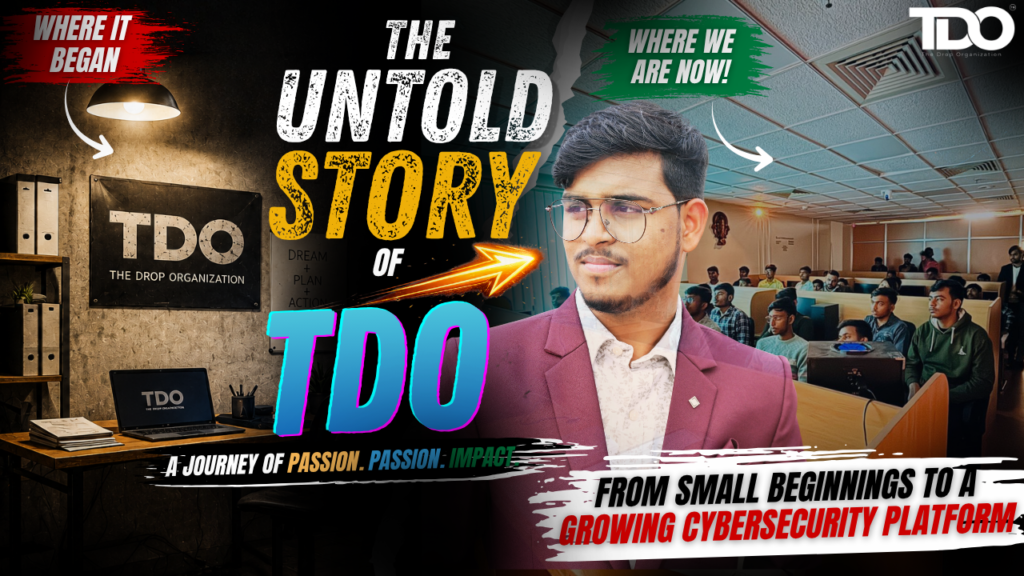
Discover the untold story of The Drop Organization (TDO), a growing cybersecurity training platform built through teamwork, innovation, student support, and a vision to transform education in India. Some start in big offices with big money, big teams and big business plans . Others start with something much smaller – a simple idea, a vision, and a group of people willing to work tirelessly to make that vision a reality. The story of The Drop Organization, or TDO as it is popularly called, is in the second category. Today, The Drop Organization is a well-known cybersecurity training platform, a training brand and a vibrant community of learners interested in ethical hacking, cybersecurity and digital marketing. Students can see courses, live classes, certifications and internships and practical learning. Many people don’t see the journey behind all of this. They don’t see the late nights of working out ideas. They do not see the thousands of experiments that failed before the success. They don’t see the little victories that eventually became milestones. They don’t see the people behind the screens who built everything piece by piece.” This is more than the story of a company. This is the story of people who chose to create something meaningful together. Here is the untold story of The Drop Organization. Also Read:- Password Security in 2026: Why Strong Passwords Are Not Enough Anymore Brick by Brick: Creating a Company From the outside, growth often seems fast. People see a company with students, instructors, offices, projects and teams and assume that success comes instantly. But the reality is often very different. The Drop Organization was not built overnight. Like all journeys of importance, it was made brick by brick. Everything we did, every process, every course, every system, every improvement, every achievement was the result of constant effort and teamwork. The organization chose to build solid foundations, not to find shortcuts. It is seldom that a strong company is built by one man. It is created by people who share a vision. At The Drop Organization, that vision has never been just about running courses or training students. From the beginning, it has been about much more than that – it’s about creating opportunities, transforming education and building practical skills that really change lives. That vision underlies every decision to this day. More Than Colleagues, A Family That Builds Together The first thing people notice when they walk into TDO is the difference in the environment. There is work to be done. There are targets. There are time limits. There are duties. But there’s something more as well. Respect. Assistance. Faith. Unity. Many organizations have departments that do not communicate very often with each other. Collaboration has always been one of the organization’s biggest strengths at The Drop Organization. Ideas move freely. We solve problems in collaboration. Celebrating success together. Failures are reviewed as a whole. The relationship between team members often goes beyond the professional. Team members support each other as colleagues, but also as people who actually want to see each other grow. This culture didn’t happen by accident. It was designed. Because when people feel respected, valued and heard, they naturally give more than their time. They put their creativity into this, their passion and their energy. And that is how The Drop Organization grew. The Philosophy Behind Training Employees Many organizations have people to perform some jobs. The Drop Organization approaches it differently. The organization believes in developing people and not just managing roles. New hires are not viewed as a resource to fill roles. They are the future leaders, creators, innovators and contributors to the journey of the organization. The Drop Organization’s training is often much more than just technical skills. Employees learn: Communication skills – Problem-solving approaches – Team collaboration- Professional ethics – Leadership qualities – Creative thinking – Client interaction. It’s meant to help a person succeed in their current role but also to prepare them for future possibilities and responsibilities. Such an attitude fosters confidence. It fosters ownership. Most importantly it creates people who care about the success of the organization because they know the organization cares about their success as well. Learning Never Stops Inside TDO One interesting thing about the internal culture at The Drop Organization is that learning doesn’t end at onboarding. The tech world is moving fast and so cybersecurity is evolving fast too. Digital marketing is a fast-moving world. Education happens rapidly. Because of this, continuous learning has become a part of the organization’s identity. Instructors learn from students. Students learn from instructors. Teams learn from one another. Each department exchanges ideas. It creates an ecosystem where knowledge is flowing in all directions. Maybe that’s one reason why innovation flows so naturally in the organization. How TDO Helps Students Beyond the Classroom? For many institutions, education stops when the class stops. And that’s usually where the real journey starts for The Drop Organization. Students are not figures or numbers in the register. They are seen as future professionals as future business people, as future ethical hackers, the upcoming marketers & the innovators of the future. It has been about practical development, not theoretical perfection. This is one of the reasons why programs like DCSC and THT put such a high value on practical exposure, real-world understanding, hands-on learning and mentorship. Students are encouraged to ask questions. They are invited to experiment. They are taught to fail safely and to learn from their failures. Because the cybersecurity industry does not reward rote memorization. It rewards understanding. This philosophy continues to inform the design and delivery of training. Developing Careers, Not Just Certificates One of the biggest challenges in education today is the widening gap between learning and employability. Many students complete certificates but find it difficult to implement what they’ve learned in real-world settings. This challenge was recognized early by The Drop Organization. The Drop Organization has increasingly transitioned from just delivering content to building career readiness. This meant creating learning experiences that
Password Security in 2026: Why Strong Passwords Are Not Enough Anymore
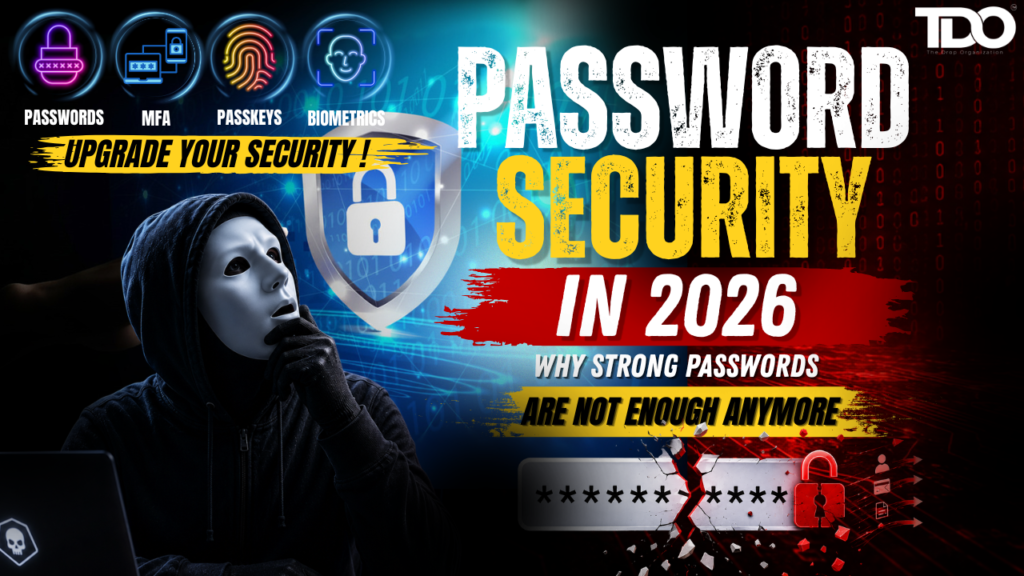
Discover why password security in 2026 requires more than strong passwords. Learn about MFA, passkeys, password managers, modern cyber threats, and how to protect your digital identity in an evolving cybersecurity landscape. Once upon a time, a strong password seemed the best way to keep the hackers at bay. If your password had a few capital letters, some numbers and a special character, you were considered safe. Cybersecurity experts advised users to create complicated combinations that would be hard to guess. For years, this advice worked pretty well. But now cybersecurity is different. Hackers are different now. Technology has evolved. And maybe most significantly, the internet itself has evolved. By 2026, the average person will have dozens, even hundreds of accounts online. Email services, social media, online banking apps, cloud storage, e-commerce sites, online learning platforms, streaming services, and corporate software all ask you to verify your identity. As our lives become more digital, protecting these accounts becomes more and more difficult. This is why password security is one of the most important issues in modern cybersecurity. The uncomfortable truth is that strong passwords alone aren’t enough. They remain an important first line of defense, but cybercriminals now have sophisticated techniques that can bypass even carefully created passwords. Phishing campaigns, credential stuffing, malware, session hijacking, AI-powered scams, and social engineering have changed the way organizations and individuals think about digital security. In 2026, the question won’t be “Is your password strong enough?” The real question is: Is your overall authentication strategy sufficiently strong. Also Read:- Public Wi-Fi Security in 2026: The Hidden Dangers of Free Wi-Fi Every User Should Know The Evolution of Password Security The history of password security has been tightly intertwined with the development of the internet itself. In the early days of the web, people generally had just a handful of online accounts. Cyber threats were relatively limited so simple passwords like birthdays, names or favourite sports teams were common. As cybercrime progressed, the security recommendations became more sophisticated. Users were prompted to: These practices greatly increased password security over many years. But the attackers adapted. The hackers of today don’t just try to brute-force passwords. They use automation, artificial intelligence, leaked databases and sophisticated social engineering techniques to get into accounts. Why Strong Passwords Aren’t Enough Anymore? Imagine building a solid front door for your house and leaving all the windows open. That’s about what a lot of people do today. They make complex passwords, but expose themselves with other vulnerabilities. Passwords alone are not a very robust security mechanism anymore given the several modern ways to attack them. The Rise of Credential Stuffing Attacks Credential stuffing is one of the biggest threats to password security. Cybercriminals grab the usernames and passwords that were leaked in prior data breaches and try them automatically on many sites. The attack works because many users reuse passwords. A password stolen from an old shopping website breach may eventually unlock: The strength of the password doesn’t matter if it was already leaked on some other site. Phishing Attacks Bypass Strong Passwords Completely One of the most effective ways to side-step password security has been through phishing. Hackers don’t work to break passwords anymore. They just convince the users to donate them willingly. Today’s phishing campaigns are highly sophisticated. Victims give their credentials willingly and don’t know they are communicating with attackers. You could have a twenty character password, but if you hand it over to a cybercriminal it’s not going to help you. Malwares & Keyloggers: Tracking Every Keystroke Another major challenge to password security is malware. There are some types of malware that are created specifically to record keystrokes. These programs, called keyloggers, record everything users type without them knowing. This may include: Even the strongest password is useless if attackers can see it being typed. Artificial Intelligence Is Transforming Cyber Attacks Artificial intelligence is reshaping the landscape of cybersecurity and cybercrime. AI is used by attackers to: This is a sign that simple passwords are no longer enough, and that modern password security strategies are needed in the face of AI-powered cyber attacks. Multi-Factor Authentication: The New Security Standard Passwords are your first line of defense, but Multi-Factor Authentication is the security guard at the door. Multi-factor authentication (MFA) requires users to verify their identity using more than one method of authentication. Usually it means: Even if attackers steal credentials, they still have to get access to the second verification factor. This dramatically improves password security. Why MFA Is the New Must-Have in 2026? MFA is increasingly being seen as a requirement, not an option, by cyber security experts. Big tech companies now recommend or require MFA because it stops many common attacks.MFA protects against: For an organization, MFA is often one of the most cost-effective cyber security investments it can make. Enter Passkeys: The Next Generation Password Security One of the most exciting evolutions in password security is the rise of passkeys. Passkeys replace the use of passwords with cryptographic methods of authentication tied to trusted devices. Instead of a password users verify themselves by using finger prints, facial recognition or device authentications. Passkeys are highly phishing resistant because the authentication process is based on cryptographic keys rather than shared secrets. Are Passkeys the Future of Passwords? Traditional passwords have a number of weaknesses- they can be guessed, they can be stolen, they can be reused & they can be leaked. Meanwhile, passkeys eliminate many of these problems. There are several benefits of using include: Many experts believe passkeys represent the future of password security. Password Managers: The Security Tool You’re Not Using With dozens of accounts, it can be difficult to remember unique passwords. This results in risky behaviors such as password reuse. Password managers address this problem by storing credentials securely and creating complex passwords automatically. Modern password managers offer: Strong password security is achieved by using a password manager. Building Better Password Habits Passwords alone are not enough, but they are still
Public Wi-Fi Security in 2026: The Hidden Dangers of Free Wi-Fi Every User Should Know
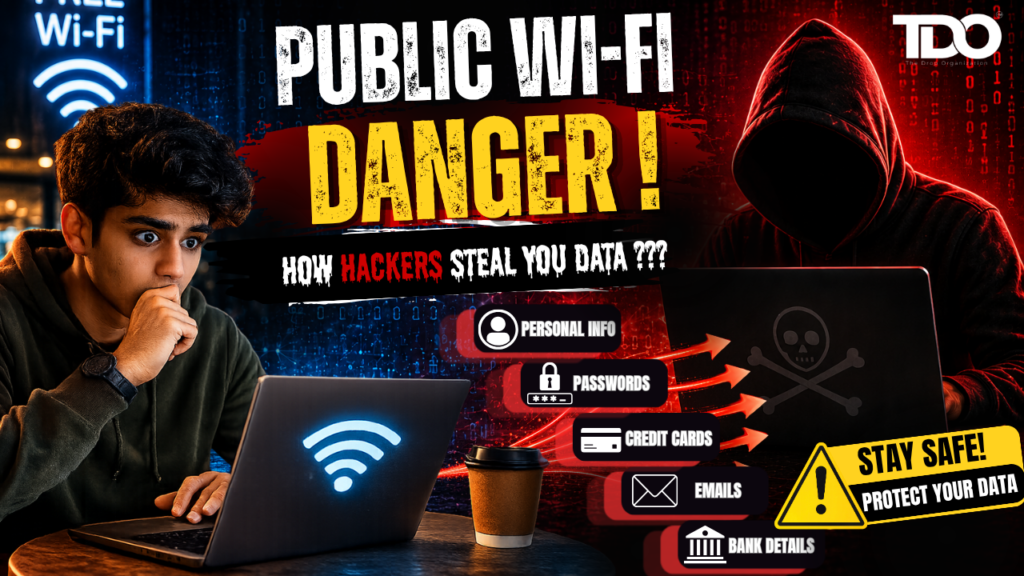
Protect your data with strong public Wi-Fi security. Learn how hackers exploit free networks and discover practical tips for safe internet browsing. Imagine yourself sitting in your favorite coffee shop. You order a coffee, open your laptop, and sign into the free public Wi-Fi network. You’re checking emails, online banking, scrolling through social media, maybe even making a digital payment in seconds. That sounds useful. It feels like it’s normal. It feels safe. But what if, just a few tables away, someone is secretly watching what you do on the Internet? What if the Wi-Fi network you’re connected to isn’t really the café’s? What if your passwords, banking information and personal messages are being intercepted without your knowledge? This isn’t a Hollywood cyber security scene. It happens every day, all over the world. Public Wi-Fi security networks are a regular part of modern life as the internet becomes more and more accessible. Free internet access is provided in airports, hotels, restaurants, shopping malls, railway stations, educational institutions and public spaces. These services are very convenient but they also have serious cybersecurity risks. This is the reason why public Wi-Fi security has become one of the most relevant topics in cybersecurity in recent years. Most of us log on to public networks without giving much thought to the dangers. Unfortunately, cyber criminals are well aware of this behavior. They target public Wi-Fi users actively. Unsecured networks often offer easy opportunities to steal sensitive information. It’s not only cybersecurity professionals who need to understand public Wi-Fi security anymore. Understanding how these networks operate and how hackers take advantage of them is essential for every student, professional, business owner, and internet user. In this guide we’ll explore the unseen dangers of public Wi-Fi, understand how hackers steal data and what you can do to stay safe when using public networks. Also Read:- Cybersecurity for Students: Why Learning Digital Security Is No Longer Optional in 2026 Why Is Public Wi-Fi Everywhere? The desire to be connected to the Internet has never been greater. People need to access the internet for online classes, remote work, social media, banking, shopping, streaming services, as well as for communication purposes. To attract customers and improve convenience, businesses frequently provide free Wi-Fi services. Today, you can find free internet access in airports, cafés, restaurants, hotels, libraries, colleges, shopping centers, railway stations and many such places. These services are easy, but they don’t always provide strong public Wi-Fi security. Many users think that if a network needs a password it must be secure.Unfortunately, that assumption is often incorrect. Why Hackers Like Public Wi-Fi Networks? Public Wi-Fi networks have become a favorite hunting ground for cybercriminals, as they offer something hackers always look for – access to a large number of potential victims in one place. From an airport, railway station, shopping mall, coffee shop or a college campus these networks typically have hundreds of connected devices at a time. Most users connect without a second thought about security, thinking that a publicly available network has to be safe. Sadly, that assumption can be dangerous. Hackers know that public Wi-Fi networks are often set up for convenience rather than security. Public Wi-Fi networks often don’t have the sophisticated protection mechanisms protected home or corporate networks. This creates opportunities for attackers to intercept communications, monitor online activity and steal valuable data. For a cybercriminal, attacking a public Wi-Fi network can be a lot more effective than attacking people one at a time. To avoid falling victim to the various scams, anyone who regularly connects to free internet services should know how to secure their public Wi-Fi security. Hackers are especially interested in: Public Wi-Fi networks are often poorly secured, and attackers can take advantage of the information with relatively little effort. Most Common Security Threats on Public Wi-Fi A lot of people think you need to be a master hacker to launch a cyber attack. In fact, some of the attacks against public Wi-Fi users are surprisingly simple. Let’s examine the most common threats. 1. Man in the Middle (MITM) Attacks The Man-in-the-Middle attack is one of the most dangerous threats to public Wi-Fi security. In this attack, a hacker secretly inserts themselves between your device and the website or service you’re trying to visit. Your data has to go through the attacker’s system before it talks to the actual website you wanted to visit. This permits the hacker to: Most victims never know that they are under attack. 2. Rogue Wi-Fi Networks (Evil Twin Attacks) Have you ever seen multiple public Wi-Fi networks with the same or similar names? For instance: Cybercriminals often set up fake networks that look a lot like real ones. This technique is called an Evil Twin attack. A user connects to the attacker’s network thinking it is legitimate. Once the hacker is connected, he may: This attack highlights the importance of education on public Wi-Fi security. 3. Packet Sniffing Data sent over a network is broken down into small pieces called packets. Data transmitted over a network is broken down into small pieces called packets. Packet-sniffing tools are used by hackers to capture and analyze this data. Attackers can potentially intercept weak public networks usernames, passwords, browsing history, emails or session tokens. Encryption helps to reduce this risk, but many users still visit insecure websites and apps. Strong public Wi-Fi security practices help minimize exposure to packet-sniffing attacks. 4.Malware Distribution Public Wi-Fi networks can also be a delivery mechanism for malware. Attackers might redirect users to infected websites, exploit browser vulnerabilities or trick users into downloading malicious files. Once installed, malware can record keystrokes, steal data, encrypt files and even monitor activities. This makes public Wi-Fi security an essential aspect of cybersecurity awareness in general. 5. Session Hijacking When you log into a website , the website creates a session that keeps you logged in. Sometimes hackers can steal these session tokens. If they succeed, they might gain access to your social media accounts, your
Cybersecurity for Students: Why Learning Digital Security Is No Longer Optional in 2026

Cybersecurity for students is becoming an essential skill in 2026. Discover why digital security matters, the risks students face online, career opportunities in cybersecurity, and how courses like DCSC and THT from The Drop Organization (TDO) can help build a secure future. Ten years ago, cybersecurity for students was often seen as a niche domain for IT professionals, government agencies and big corporations. Most students focused on traditional subjects and thought cybersecurity was the domain of experts behind computer screens in large organizations. Fast forward to 2026, and the reality is completely different. Students now spend much of their lives online. The internet has become a part of student life – attending virtual classes, submitting assignments, managing social media profiles, online banking, digital payments and even building personal brands. Technology has created countless opportunities but also serious risks. Cybercriminals are no longer just targeting large organizations. Students are one of the fastest growing targets because they often have valuable personal information but lack enough cybersecurity awareness. And that’s exactly why cybersecurity for students has become one of the most important topics in modern education. Digital security is no longer an option for techies, it’s a life skill. In the digital world of today, every student must understand how cyber threats work, how personal information can be stolen, and how online attacks can impact academic and professional futures. The question is no longer whether students should learn cybersecurity. The real question is: Can they afford not to? Also Read:- AI in Cyber Attacks: How Artificial Intelligence Is Powering the Next Generation of Cyber Threats in 2026 The Digital Lives of Today’s Students Think about the normal day of a student.The day often starts by checking notifications on a smartphone. Students use email accounts, educational portals, cloud storage, social media, instant messaging, digital payment apps and online learning systems during the day. Each of these digital activities leaves a footprint online. Every account has valuable information like personal details, academic records, contact information, financial information, passwords, photos and videos and social connections as well. This data is an opportunity for cybercriminals. Many students are wrong in believing that hackers only attack the rich or the big guys. In reality attackers often go for the low-hanging fruit and students are often victimized because of weak passwords, unsafe browsing habits and lack of cybersecurity for students awareness. This increasing danger makes cybersecurity for students more relevant than ever before. Why Are Students Now the Prime Targets of Cybercriminals? Cybercriminals understand that students are highly active online and often less cautious than experienced professionals. There are a number of reasons why students are attractive targets: These risks are a critical part of cybersecurity for students, and it helps individuals make safer decisions online. Common Cyber Threats Students Face Every Day One of the reasons cybersecurity for students is so important is because of the vast range of cyber threats in everyday life. These threats are why cybersecurity for students should be part of everyday digital life. The Price of Poor Digital Security Many students are not aware of the consequences of cyber attacks. At first glance, a hacked account may seem like a minor inconvenience, but the effects can linger. The possible consequences are: What happens if you work on an academic project for months and then lose access to cloud storage when your account is hacked? Or think of what hacking a social media account can do to internship openings and professional relationships. These risks demonstrate why investing time in cybersecurity for students is an investment in future success. Cybersecurity Skills Students Must Know Students should also learn cybersecurity skills, just as they learn math, communication and problem-solving skills. These are the basic skills which make up the foundation of effective cybersecurity for students. Why Is Cybersecurity Emerging As a Career Opportunity? Besides personal protection, cybersecurity for students has become one of the fastest growing industries globally. Organizations are facing a growing threat from cyber attacks and require skilled professionals to safeguard their digital assets. This makes careers in cybersecurity highly sought after. Popular roles include: Ethical Hacker, Penetration Tester, Security Analyst, SOC Analyst, Cybersecurity Consultant, Incident Response Specialist, Vulnerability Assessor, and many more. For students exploring career options, cybersecurity offers: This makes cybersecurity for students relevant not only for protection of self, but also for career development. The Rise of Ethical Hacking and Cybersecurity Education Educational institutions and training organizations are expanding cybersecurity for students programs as cyber threats increase. Ethical hacking is one of the most exciting career tracks for students interested in technology and security. Ethical hackers employ the same techniques as hackers but use these techniques for defensive purposes. They seek to: Students learn ethical hacking, how attacks happen and how organizations can defend themselves. How The Drop Organization (TDO) Is Empowering Future Cybersecurity Professionals? The Drop Organization (TDO) has established itself as a leading platform for cybersecurity education and skill development. Recognizing the growing importance of cybersecurity for students, TDO provides practical, industry-focused training programs designed to prepare learners for real-world challenges. DCSC: Drop Certified Security Course – A Flexible Start to Your Cybersecurity Journey One of the biggest challenges that students face while choosing a cybersecurity course is the affordability. Many learners want to develop cybersecurity skills but are hesitant because of large upfront fees. Keeping this challenge in mind, The Drop Organization (TDO) has re-engineered the DCSC (Drop Certified Security Course) as a flexible learning model that allows students to embark on their cybersecurity journey based on their budget and learning goals. Unlike conventional cybersecurity courses that follow a one-size-fits-all structure, DCSC offers multiple tiers of learning where students can upgrade their learning experience in a gradual manner as per their progress. DCSC Starter Plan – Rs. 2,500 The Starter Plan is great for beginners who want to get their feet wet in cybersecurity before committing to a larger investment. Students are awarded: This plan is perfect for students who are new to cybersecurity and want
AI in Cyber Attacks: How Artificial Intelligence Is Powering the Next Generation of Cyber Threats in 2026
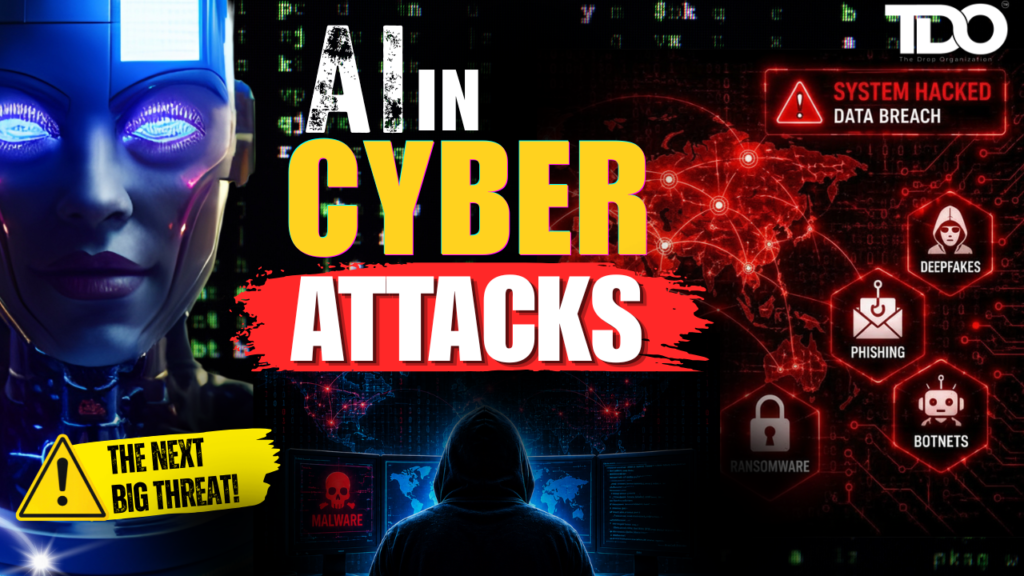
Learn how AI in cyber attacks is changing the cybersecurity landscape. Discover AI powered phishing attacks, deep fakes, adaptive malware and the best ways to defend yourself from AI powered cyber threats. Artificial Intelligence (AI) is one of the most revolutionary technologies of the 21st century. AI is transforming industries like healthcare, finance, education, and entertainment through automation of processes, analysis of vast data, and improved decision-making. Businesses around the world are using AI to increase productivity, cut costs and develop new solutions. But like any powerful technology, AI has a dark side. As organizations use AI to drive growth and efficiency, cybercriminals are increasingly using it to launch sophisticated cyber attacks. The emergence of AI in cyber attacks has significantly transformed the cybersecurity landscape, posing new challenges for businesses, governments and individuals alike. Classic cyber threats were highly dependent on human labor and manual execution. AI in cyber attacks now allows hackers to automate malicious activities, adapt to security defenses, and create highly targeted attacks on an unprecedented scale. From AI-generated phishing emails to deepfake scams to adaptive malware, cybercrime is getting smarter and more dangerous. The rise in the use of AI in cybercrime has raised concerns among cybersecurity professionals around the world. As AI technologies continue to evolve, it is important to understand how AI works in cyber attacks to protect digital systems and sensitive information. In this comprehensive guide, we will explore how hackers are using artificial intelligence, examine real-world examples, discuss emerging threats, and learn how organizations can defend themselves against the next generation of cyber attacks. Also Read:- Social Media Hacks Exposed: 7 Powerful Safety Tips to Protect Your Digital Life What is Artificial Intelligence in Cyber Attacks? Artificial Intelligence (AI) is the ability of computer systems to perform tasks that normally require human intelligence, such as learning, reasoning, decision-making, and pattern recognition. When AI is included in the attack strategies of cybercriminals, they have several benefits such as more rapid automation, better targeting, adaptive conduct, improved evasion tactics as well as execution of massive attack. The use of AI in cyber attacks is increasing and hackers are now able to carry out operations that were previously difficult, time-consuming, or impossible. AI-powered tools can analyse huge amounts of data, find vulnerabilities and launch attacks automatically. Unlike traditional cyber threats, AI used in cyber attacks is constantly learning and evolving, making it much harder for traditional security systems to detect. Why Are Cybercriminals Using AI? Hackers are always trying to work smarter, not harder. Artificial intelligence offers exactly that. Here are some of the main reasons why cybercriminals are adopting AI: Cyber crime is becoming more scalable and effective than ever with the increasing use of AI in cyber attacks. 1. Phishing Attacks Powered by AI: Smarter Than Ever Phishing is one of the most dangerous applications of AI in cyber attacks. Phishing emails used to be rife with grammatical errors and suspicious wording. AI-driven phishing attacks today generate very convincing messages that look like human communication. How Phishing Attacks Are Powered by AI? Hackers use machine learning algorithms to: AI phishing attacks are very convincing and are able to bypass existing security filters easily. Real-World Example Imagine an email from your boss that refers to a recent meeting and requests an urgent document. The email seems real because AI checked public information and communication patterns before writing the messages. This demonstrates how much AI in cyber attacks increases the success rate of phishing. 2. Social Engineering and Deepfake Technology Deepfakes are another alarming application of AI in cyber attacks. Deepfake technology uses artificial intelligence to produce lifelike audio, video and images that mimic real people. Why Are Deepfakes A Threat? Deepfakes can be used to: Imagine that you get a video call from your CEO asking you to wire money immediately — except the person on the screen is 100% AI-generated. Real-World Example Cybercriminals have already used AI-generated voice cloning technology to impersonate executives and sign off on millions of dollars of fraudulent financial transactions. Deepfakes and AI are being used in cyber attacks making it harder and harder to verify identity. 3. AI-powered Malware and Ransomware Adaptive malware is one of the most advanced applications of AI in cyber attacks. Traditional malware uses static instructions. Malware based on AI learns from its surroundings and changes its behavior accordingly. Capabilities of AI-Driven Malware Ransomware powered by AI can learn the behavior of the network and figure out which files, when encrypted, will create maximum disruption. This evolution in AI in cyber attacks increases both the effectiveness and profitability of ransomware operations. 4. Automated Vulnerability Scanning and Exploitation Finding system vulnerabilities traditionally required significant expertise and manual effort. Now, AI in cyber attacks does all this by itself. AI tools may be able to: Cyber risk has grown exponentially since hackers can now attack multiple organizations simultaneously. 5. AI-Enhanced Evasion Techniques Cybersecurity systems rely heavily on detecting known attack patterns. But AI in cyber attacks allows the malicious software to evolve continuously. AI-based Evasion Strategies AI can watch firewalls and intrusion detection systems working and then change attacks so they don’t trip alarms. Consequently, traditional security tools are not capable of identifying these sophisticated threats. The Future of AI Powered Cyber Attacks The future of AI in cyber attacks will probably involve: As AI technology becomes more available, cybercriminals may have access to more sophisticated tools to launch attacks. Organizations need to start preparing now to defend against these evolving threats. How Organizations Can Protect Themselves From AI-Powered Threats? Defending against AI in cyber attacks requires a proactive cybersecurity strategy. 1. Leverage AI-Powered Defense Systems Organizations should use AI-enabled cybersecurity solutions that can detect anomaly, observe behavior, and respond automatically along with spotting suspicious patterns. 2. Improve Email Security Advanced email filters can identify phishing attacks, phony domains, attachments that are suspicious and harmful links too. These systems help to lower the risk of AI-driven phishing attacks. 3. Cybersecurity Training for Employees Human error is
Social Media Hacks Exposed: 7 Powerful Safety Tips to Protect Your Digital Life
Discover the most common social media hacks and learn 7 powerful safety tips to protect your accounts from cybercriminals. Stay secure online with expert cybersecurity awareness from The Drop Organization (TDO). Social media is now a huge part of our everyday lives. From sharing pictures and chatting with friends to running businesses and building careers, platforms like Instagram, Facebook, WhatsApp, LinkedIn, Snapchat and X are ingrained in how we communicate online. But while social media brings convenience and connectivity, it also brings opportunity for cybercriminals. Thousands of social media accounts are hacked every day worldwide. Some people lose personal data, some lose money, some lose access to their business, private images, even their online identity. What makes this even more dangerous is that many victims are never aware of how the attack actually happened. Hackers can get into your social media accounts with a weak password, a fake link or an unsecured Wi-Fi connection. Today’s cybercriminals are more clever, faster and more manipulative than ever before. That’s why learning about social media security isn’t an option anymore. Whether you’re a student, content creator, business owner, influencer or just a regular internet user, keeping your social media accounts safe needs to be a priority. In this comprehensive guide, we’ll break down how social media hacks occur and share 7 powerful safety tips to help protect your digital life from cyber threats. TDO is educating students about cybersecurity awareness and ethical hacking to help students learn how modern cyberattacks work and how to protect themselves against them effectively. TDO’s hands-on cyber training prepares learners to be safe in the digital world of today. Also Read:- Top 7 Benefits of an Ethical Hacking Course for Future Cybersecurity Professionals What Are Social Media Hacks? Social media hacks are illegal or manipulative use of certain techniques to get someone’s account, private data or online identity. Hackers target social media accounts for many reasons such as: Hackers attack systems using technical methods directly in many cases but manipulate human behavior instead. This is known as social engineering. Most social media hacks are caused by users unknowingly making small security mistakes. Why Social Media Accounts Are Easy Targets for Hackers? Many people think that only the rich and famous or corporations get hacked. In fact, regular users are often easier to target because they often have weaker security. Here are some common reasons for social media hack account takeover: Hackers know that humans are often the weak link in cybersecurity. That’s why cybercriminals work so hard to exploit your trust, your curiosity, your fear and a sense of urgency. The Rising Threat of Social Media Cybercrime Social media cyber crime is rapidly growing worldwide. Fake giveaways, phishing messages, account takeovers, impersonation scams, and malicious links are all on the rise. Today, hackers use advanced techniques like: As cyberattacks grow more sophisticated, users will need to be smarter and more security conscious. This is where cybersecurity awareness plays a very important role. Students at The Drop Organization (TDO) learn how hackers exploit vulnerabilities and how ethical hacking techniques can help organizations and individuals protect themselves from modern digital threats. 1. Create Strong & Unique Passwords for Each Social Media Account One of the biggest mistakes people make is using simple or repetitive passwords across multiple accounts. Hackers use automated tools that can test millions of common password combinations in seconds. Passwords such as: can be cracked in a split second. Even worse, if a website is compromised and you use that password with other sites, the hackers can access all your linked accounts. How to Make Strong Passwords? A strong password should include: Example of a strong password: TDO#Cyber2026!Secure Avoid using birthdays, phone numbers , pet names or simple words. Password managers can also assist you in creating and securely storing complex passwords. Strong passwords are your first line of defense against social media hacks. 2. Activate Two-Factor Authentication (2FA) If you’re not using two-factor authentication, your account security is half assed. Two-factor authentication adds an extra layer of security by requiring you to perform a second verification step after you enter your password. Even if hackers get your password, they still can’t get into your account without the second authentication factor. Popular 2FA techniques include authentication apps, SMS OTPs, email verification & security keys. Using Google Authenticator or Microsoft Authenticator is safer than SMS-based verification, as phone OTPs can be circumvented with SIM-swapping attacks. The Importance of 2FA Imagine your password being stolen in a data breach. Without 2FA, hackers can instantly sign in to your account. But with 2FA activated, the attacker still requires your second verification code. This one feature alone can stop a massive percentage of account takeover attacks. 3. Don’t click on suspicious-looking links or messages Phishing is one of the most common hacking methods on social media. Phishing attacks fool users into entering their login credentials on fake sites that look real. Hackers often send messages such as: The links typically lead users to fake login pages to steal credentials. How to Prevent Phishing Attacks? Before clicking on a link: Hackers rely on panic and curiosity. Slowing down before clicking anything suspicious can save your account. At TDO, students of ethical hacking learn how phishing attacks are made and how cybersecurity professionals spot fake websites and malicious campaigns. 4. Do not log onto social media on public Wi-Fi Public Wi-Fi networks in cafes, airports, hotels or malls are convenient but often insecure. Hackers can create fake Wi-Fi hotspots or intercept traffic on unencrypted networks to steal login credentials. This kind of attack is called: Man-in-the-Middle (MITM) Attack. In such attacks cybercriminals secretly listen to the communication between your device and the internet. How to Stay Safe on Public Wi-Fi? Cybersecurity experts always recommend using secure private connections when possible. 5. Think twice before posting online Sharing a lot of personal information on social media can help hackers build detailed profiles about you. This information can then be used for password guessing,
Top 7 Benefits of an Ethical Hacking Course for Future Cybersecurity Professionals
Discover the 7 powerful benefits of an ethical hacking course and how The Drop Organization (TDO) helps students build successful cybersecurity careers through DCSC, THT, and DCMC professional training programs. The digital world is growing by leaps and bounds. Today, everything we do is digital: from online banking to clouds, from artificial intelligence to social media platforms. But while technology is advancing, cyber threats are outpacing it. Hackers, ransomware, phishing scams and data breaches are a constant attack on businesses, governments and individuals. That’s why the need for cybersecurity professionals has exploded all over the globe. In this ever expanding digital battlefield, ethical hackers have emerged as the guardians of modern technology. They are trained professionals who think like hackers, but work within the law to secure systems, protect networks and stop cybercriminals before they attack. This increasing demand makes an ethical hacking course one of the smartest career decisions students, IT professionals and tech enthusiasts can make. The Drop Organization (TDO) trains students with practical cybersecurity skills to prepare them for the real world challenges. With advanced programs like DCSC (Drop Certified Security Course), THT (The Hack Track) and DCMC (Drop Certified Marketing Course), TDO is helping students to transform their careers and get into the booming cybersecurity industry with confidence. If you’re wondering if an ethical hacking course is worth it or not, this detailed guide will show you the biggest advantages, career opportunities, industry demand and how TDO can help you build a successful future in cybersecurity. Also Read:- 7 Dangerous Ransomware Attacks Explained: Famous Examples & Prevention Guide What Is an Ethical Hacking Course? Before we dive into the benefits, we should know what an ethical hacking course actually means. The ethical hacking course is a professional cyber security training course that teaches students how hackers attack systems and how organizations can protect themselves from cyber threats. Ethical hackers use legal hacking techniques to find holes in websites, applications, servers, and networks before cybercriminals can take advantage of them. Ethical hackers are allowed to do what they do, unlike malicious hackers, and operate within legal cyber security frameworks. Their aim is to enhance digital security and protect organizations from cyberattacks. A professional ethical hacking course will usually cover: At The Drop Organization (TDO), students get industry-focused training with practical lab sessions, live demonstrations, career guidance, and real cybersecurity tools used by professionals all over the world. Why Ethical Hacking is Fast Becoming One of the Fastest Growing Careers? In the coming years, it is estimated that cybercrime will cost trillions of dollars worldwide. Today, all organizations need cybersecurity professionals to protect their systems and customer data. Startups and multinational corporations alike are hiring ethical hackers and cyber security professionals. The demand is so huge and the industry of the ethical hacking course is one of the most searched education industries online. Some of the major factors behind this growth are: As companies continue to go online the need for trained ethical hackers will continue to grow. 1. Ethical Hacking Course Leads to High-Demand Careers One of the biggest benefits of doing an ethical hacking course is the great career scope in the cybersecurity industry. Today, companies are desperately looking for skilled professionals that can secure their digital infrastructure. It has created thousands of jobs around the world. After completing the ethical hacking course, the students can apply for the below-mentioned roles: The Drop Organization (TDO) students are supported in their professional development as well as their technical development. The organization helps students to be job-ready by providing them with practical exposure and career mentorship. The DCSC course is especially beneficial for beginners and intermediate learners to develop strong cybersecurity foundations toward professional development. 2. Practical Hands On Ethical Hacking Skills Course The difference between traditional education systems that focus mainly on theory and a professional ethical hacking course is that the latter teaches practical real-world skills. Cybersecurity is not a theoretical field that can make one successful. Students need to understand real attack scenarios, how to exploit vulnerabilities, how to defend systems and penetration testing methodologies. Students at TDO work on: The THT (The Hack Track) programme is specially tailored for students who are keen to gain in-depth practical exposure to ethical hacking tools and cybersecurity operations. This experience of hands-on learning helps students gain their confidence and experience before entering the professional world. 3. Ethical Hacking Course for a Future-Proof Career AI and digital transformation gradually automates many traditional jobs. But cyber security is one of the few industries where human expertise will be needed at all times. Cybercriminals are always changing their attack methods, so there’s always a need for skilled cybersecurity professionals in the organizations. By enrolling in an ethical hacking course, students get ready for an industry that is future-proof and will continue to grow for decades to come. Cybersecurity professionals needed in: The world is short on cybersecurity professionals, so skilled ethical hackers will have great careers in the years to come. 4. Ethical Hacking Course Provides Good Salary Packages One of the strongest reasons students enroll in ethical hacking courses is the lucrative salary prospects. There is a huge demand for cybersecurity professionals and companies are willing to pay top dollar for skilled professionals. Freshers with hands-on knowledge in cybersecurity can get competitive entry level packages. Experienced professionals can earn up to much higher salaries over the years. Factors affecting cybersecurity salaries include: We’re about building real-world expertise, not just theoretical certification at TDO. This practical skills development enhances employability and career advancement opportunities. 5. Ethical Hacking Course Develops Problem Solving and Analytical Skills Cybersecurity professionals are constantly looking for weaknesses, researching threats and solving difficult security problems. Ethical hacking course teaches students to think critically and how to think like an attacker. Students learn how to: These analytical skills are useful in cybersecurity and in many other technical and business professions. The Drop Organization (TDO) training methodology is focused on logical thinking, practical investigation and advanced cybersecurity problem