
The Dark Side of Digital Marketing Tactics: 7 Manipulative Tactics Consumers Should Know in 2026
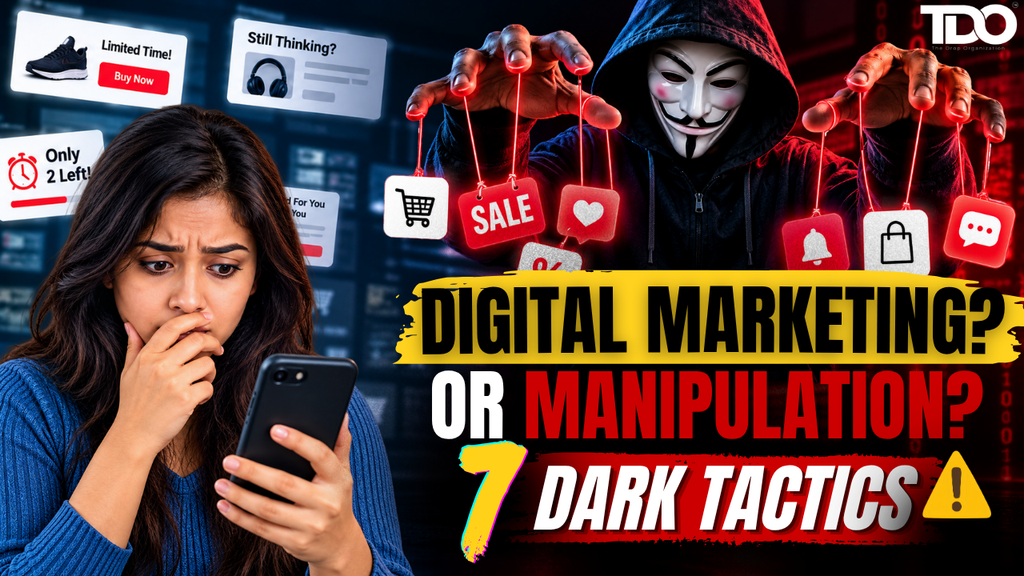
Discover 7 manipulative digital marketing tactics used to influence online consumers, from dark patterns and fake urgency to hidden advertising and personalized persuasion, and learn how to recognize them. You’re scrolling through Instagram and suddenly you see a product that seems almost too relevant to your interests. You click on the ad and go to the website and see a message that says “Only 2 left!” A countdown timer begins to tick. You put the product in the cart and suddenly another offer pops up, ” Add this now and save ₹499″. You halt. Then another message comes: “Don’t leave now! Your special discount expires at 03:42. You buy it. But then you start to wonder: Was I really wanting this product or was I pressured into buying it? This question is at the heart of the dark side of modern digital marketing tactics. Digital marketing has changed the way businesses speak to customers. Search engines, social media, websites, email campaigns, influencers, recommendation engines and online advertising – they all give brands a uniquely precise way to reach audiences. Many of these techniques are perfectly legitimate and useful. Relevant advertising can help consumers find products, compare options and find services that truly solve their problems. The problem is that digital marketing tactics are created not only to persuade but to confuse, to pressure, to hide, to exploit predictable psychological reactions. These practices are often described in terms such as dark patterns, manipulative marketing, deceptive design and misleading advertising. The issue is significant enough that regulators and advertising organizations have increasingly focused on it. A 2024 international study led by the U.S. The Federal Trade Commission and consumer-protection networks looked at 642 subscription websites and apps in several countries and found that nearly 76% exhibited at least one possible dark pattern and nearly 67% exhibited multiple possible dark patterns. Authorities also emphasized that identifying a potential dark pattern did not in itself demonstrate that the practice was illegal. The Federal Trade Commission India has also formally dealt with the subject. The 2023 guidelines of the Central Consumer Protection Authority identify 13 dark patterns, including false urgency, basket sneaking, confirm shaming, forced action, subscription traps, interface interference, bait and switch, drip pricing and disguised advertisements. In 2025, the Indian government instructed e-commerce platforms to conduct self-audits and eliminate such practices. So, what exactly are these digital marketing tactics, how do they influence us, and how can ordinary consumers recognize them? Let’s explore seven of the most important digital marketing tactics. Also Read:- OTP Scams Explained: 7 Dangerous Tricks Hackers Use to Steal Your Money in 2026 What are Manipulative Digital Marketing Tactics? Before we look at individual examples it is important to make one distinction. Persuasion is not automatically manipulation. Marketing is supposed to persuade people. To be clear, saying something good about a product in an ad, really giving a discount, or putting a post on social media about why a service is useful isn’t cheating, but it can influence your decision to buy something. The problem begins where the method affects the capacity of a person to make a real choice. Dark patterns, as defined by the Advertising Standards Council of India, are practices related to online choice architecture that can mislead, coerce or manipulate consumers and may lead to consumer detriment. Its guidelines discuss examples such as hidden information, pre-selected choices, disguised advertising and other techniques that can shape decisions. So, not all persuasive advertisements fit the category of harmful digital marketing tactics. One way to think about the difference is: Persuasion: “Here is why this product may be useful to you.” Manipulation: “Here is a carefully designed experience intended to make you act before you understand what you are agreeing to.” This distinction becomes much clearer when we look at the digital marketing tactics themselves. 1. Fake Urgency: “Buy Now or You Will Miss Out!” You probably have seen this one. “Just 2 left! ” or “Sale ends tonight!” or “This offer ends in 10 minutes!” or “37 people are looking at this product right now!” Urgency is one of the oldest tricks in the marketer’s book, but digital channels can make it much more effective. You can show a countdown timer next to a product. When you arrive at a website, you may immediately see a notification. An ad can tell you over and over that the chance is disappearing. Sometimes it’s a genuine emergency. A business can only have so much in stock, or a promotion may actually end at a certain time. The problem arises when urgency is manufactured or falsely framed. This is called false urgency and is one of the dark patterns of digital marketing tactics flagged by India’s consumer-protection guidelines. Why does it work? Because urgency alters the decision-making context. So instead of asking: “Do I want this?”, you begin to ask: “What if I miss it?” That’s a whole different psychological issue. FOMO, or the fear of missing out , can cause consumers to make choices they might rethink with a little more time . This is why fake urgency is one of the most recognizable digital marketing tactics, consumers should learn to identify. How to protect yourself? Before responding to a countdown or “last chance” message, ask yourself: Sometimes, a five-minute wait is enough to break the psychological effect of digital marketing tactics. 2. Hidden Costs and Drip Pricing Imagine you find a flight, hotel room, subscription, or online product for a great price. You think: “That’s surprisingly affordable.” You walk to the register. Then there’s a service charge. Then a platform charge. Then a processing fee and then a convenience fee. Suddenly the final amount looks very different from the price that attracted you in the first place. This is a common practice associated with drip pricing where extra costs are revealed in stages during the purchase process. Of course, not all extra fees are inherently misleading. Businesses may charge legitimate taxes, delivery fees or service charges. The worry