
CyberSecurity Course vs Traditional IT Courses – The Ultimate Guide in 2026 (Smart Decision)
Looking for a cybersecurity course? Master real-world security skills, tools, and techniques with hands-on training and expert guidance. The digital environment is changing under our feet. Ten years ago, the key to a secure job was a broad degree in information technology (IT). Specialized cyber security training has become a new titan in the education sector as the world grows more connected and data-driven. The argument between taking a cybersecurity course and a traditional IT course has become a major concern for prospective tech professionals as cyber threats become more sophisticated. We will examine the subtle differences between these two routes, assess their long-term prospects, and assist you in selecting the one that best fits your professional objectives in this extensive guide. Knowing the difference is the first step to a successful career, regardless of your interest in the complexities of ethical hacking or the fundamentals of database administration. How do a Traditional IT Course and a Specialized Cyber Security Course Differ Fundamentally? We must first examine the “breadth vs. depth” argument in order to comprehend the distinction. The goal of a traditional IT course is to provide a thorough understanding of the digital world. It covers everything from database management and fundamental networking to computer architecture and software engineering. It is the tech industry’s “GP” (General Practitioner). For business efficiency, you learn how systems are constructed, how they work together, and how to keep them up to date. On the other hand, a cybersecurity course delves deeply into the art of strategic offense and defense. A cybersecurity student learns how a malicious actor can dismantle a network and, more importantly, how to prevent that from happening, whereas a traditional IT student learns how to build a network. The emphasis moves from “functionality” to “resiliency.” Risk management, cryptography, incident response, and forensics are the main topics of study in a specialized cybersecurity course. Although traditional IT programs offer a strong foundation, they frequently lack the flexibility to keep up with the quickly changing threat landscape. For those who wish to work on the front lines of digital protection, a dedicated cybersecurity course is a more focused option because it is regularly updated to reflect the most recent vulnerabilities and defense mechanisms. Why are Courses in Cybersecurity Turning into a Specialized Requirement? “IT security” was only one of a system administrator’s many responsibilities in the early days of computing. That is no longer feasible today. A committed expert who only monitors, defends, and tests systems is necessary due to the complexity of contemporary cyberthreats, which range from state-sponsored ransomware to AI-driven phishing. Because of this change, specialized cybersecurity courses are no longer considered “niche” but rather “necessities”. These specialized programs, in contrast to traditional IT, are predicated on the idea that systems are already vulnerable. A cybersecurity specialist asks, “How can someone break this, and how can I stop them?” as opposed to a traditional IT specialist’s question, “How do I make this system work?” This defensive, proactive stance represents a fundamental philosophical change. In addition, the regulatory landscape has evolved. With the implementation of the CCPA, GDPR, and other data protection laws, businesses are subject to severe financial and legal repercussions for security lapses. Professionals who have finished a demanding cybersecurity course and comprehend the subtleties of risk management and threat mitigation now have a gap in the workforce. The following are important factors contributing to the growth of specialized security training: What are the Differences between Computer Science and an Ethical Hacking Course Curriculum? There are significant differences between an ethical hacking course and a typical computer science curriculum. Ethical hacking is practical and destructive, while computer science is theoretical and constructive. You can learn how to write clear code and optimize algorithms in a computer science program. You learn how to identify the single line of code that can be used to obtain unauthorized access in an ethical hacking course. The practice of using the same tools and methods as malevolent hackers, but with authorization and with the intention of enhancing security, is known as ethical hacking. As a result, this “Red Team” approach is reflected in the curriculum. The “Cyber Kill Chain”—the steps an attacker takes from reconnaissance to data exfiltration—is taught to you. Typically, an ethical hacking curriculum consists of the following: While computer science provides you with the “bricks and mortar,” an ethical hacking course provides you with the “x-ray vision” to identify the weaknesses. Which Route Offers Greater Salary Growth and Career Longevity? One cannot overlook the financial and career trajectory implications when deciding between specialized cybersecurity courses and a general IT path. There is currently a shortage of almost 3.5 million cybersecurity professionals worldwide, according to several industry reports. Higher salaries are inevitably the result of low supply and high demand in economics. Security specialists, particularly those with advanced certifications, have a much higher salary ceiling than general IT administrators, who may reach it relatively early. Another factor is longevity. More and more general IT jobs are being outsourced or automated. Many of the duties of a traditional junior sysadmin can now be completed by cloud automation tools. However, it is far more difficult to automate the human intuition needed for threat hunting and ethical hacking. A career centered around cybersecurity education provides a type of “future-proofing.” There will always be someone attempting to steal digital data, necessitating the need for someone to safeguard it. Think about the following career options: When compared to entry-level general IT positions, the “security path” frequently commands a starting salary premium of 20% to 30%. The Return on Investment (ROI) for individuals who invest in high-end cybersecurity courses is frequently realized within the first year of employment. Why Choose The Drop Organization (TDO) for your Security Journey? Just as crucial as what you learn is where you choose to learn. For individuals wishing to transition into the field of digital defense, The Drop Organization (TDO) has become a top choice. We understand that the transition from
Will Ethical Hacking be Replaced by AI in 2026?

Ethical Hacking is the practice of identifying and fixing security vulnerabilities to protect systems from cyber threats. Artificial Intelligence (AI) has swept through every industry, from healthcare to finance, and it has made a stormy arrival in the cybersecurity space. An unanswered question probably consumes your mind as you pursue your career or try to strengthen the defenses of your company: Will artificial intelligence eventually make ethical hacking professionals obsolete? The argument that robots will replace humans is not new, but the stakes are much higher in the delicate field of digital security. You may have seen examples of AI tools scanning networks or finding vulnerabilities in a matter of seconds, whereas a human ethical hacking team would need days or weeks to accomplish these tasks. Although this efficiency is impressive, it naturally raises concerns about the future of security operations that are led by humans. However, the reality is much more complex than a straightforward “human vs. machine” dichotomy. We need to see past the hype and examine the core principles of AI and ethical hacking in order to comprehend the direction the industry is taking. We will delve deeply into the potential of artificial intelligence, the indispensable worth of human intuition, and how to best position yourself to prosper in this changing environment. Understanding this dynamic is essential for your continued relevance, regardless of your level of experience or if you are a beginner thinking about taking an ethical hacking course. Also Read:- Ethical Hacking Roadmap with Resources in 2026 The Present Situation of AI in Cybersecurity We must first establish a foundation in the present in order to comprehend the future. AI is already a strong ally in the cybersecurity toolbox today. Without even realizing it, you probably deal with AI-driven security measures on a daily basis. Modern Intrusion Detection Systems (IDS) rely heavily on machine learning algorithms, which analyze network traffic patterns and identify anomalies that deviate from the norm. These systems excel at processing large datasets at speeds that are impossible for humans to match. AI has completely changed the reconnaissance and scanning stages of ethical hacking. AI-powered automated tools can quickly identify open ports, map out a network’s attack surface, and find known vulnerabilities. Security teams can concentrate on the most important problems first thanks to AI-driven vulnerability scanners that can rank threats according to real-time threat intelligence. The “grunt work” of cybersecurity is done by this automation, which sorts through noise to identify possible entry points. The fact that these tools are primarily reactive must be acknowledged, though. They rely on established parameters, historical data, and recognized signatures. Although their pattern recognition skills are improving, they still only use the data that was used to train them. This is the point at which ethical hacking’s human component emerges and its limitations become apparent. The Essential Human Factor: Creativity and Intuition Finding vulnerabilities is only one aspect of ethical hacking; the other is knowing how to take advantage of them in challenging, real-world situations. AI is currently lacking in the creativity and intuition needed for this. A machine can’t be programmed to think creatively because, by definition, it only knows what it knows. When faced with a system that appears to be secure, a human ethical hacking expert may ask, “What if I try this unconventional method?” This question is motivated by curiosity and lateral thinking. Take the idea of “logic bombs” or gradual, multi-stage attacks into consideration. A subtle, dormant piece of malware may go unnoticed by an AI because it doesn’t immediately cause an alarm. Nonetheless, a human ethical hacking specialist can make assumptions based on the industry, the system’s context, and the possible motivations of the threat actor. This ability to predict comes from empathy, experience, and a knowledge of human behavior—qualities that algorithms find difficult to imitate. Additionally, negotiating the “grey areas” of security is a component of ethical hacking. It is about comprehending a system’s business logic, not just about technical tricks. Although a technical vulnerability may be detected by an AI, a human can assess whether the vulnerability truly presents a business risk. For example, a bank may find an exposed database to be a serious problem, but a public data repository may not care. Only humans possess the business savvy and critical thinking needed for this risk assessment. The AI’s Restrictions in Ethical Hacking Although AI is a powerful tool, its major drawbacks mean that ethical hacking cannot be completely replaced by it. The “black box” problem is one of the most urgent problems. Deep learning models frequently make choices without providing a rationale. Transparency is critical in cybersecurity. An expert in ethical hacking must be able to communicate to stakeholders the vulnerability, its consequences, and the steps being taken to fix it. Most businesses don’t want to take the chance of depending on an opaque AI algorithm for this. Adaptability is yet another significant drawback. To train AI models, enormous volumes of data are needed. When an entirely new kind of attack vector appears, one that has never been observed before, AI systems might not be able to identify it until they have been retrained using fresh data. In contrast, human ethical hacking experts are able to adjust in real time. Furthermore, hostile attacks can target AI. Malicious actors can manipulate AI security tools in the same way that humans can fool AI image classifiers. They can create attacks especially made to avoid AI detection, or they can introduce “poisoned” data into the training set. An equally adaptive human defender who is aware of the subtleties of ethical hacking is necessary to defend against these complex, adaptive threats. The Emergence of the AI-Powered Ethical Hacker AI will enhance the ethical hacking process in the future, not replace it. Those who embrace AI as a force multiplier will be the most prosperous cybersecurity professionals in the future. Consider a situation where an ethical hacking specialist automates 80% of the scanning and reconnaissance tasks using artificial intelligence.
How to Hack WhatsApp Account Ethical Hacking?
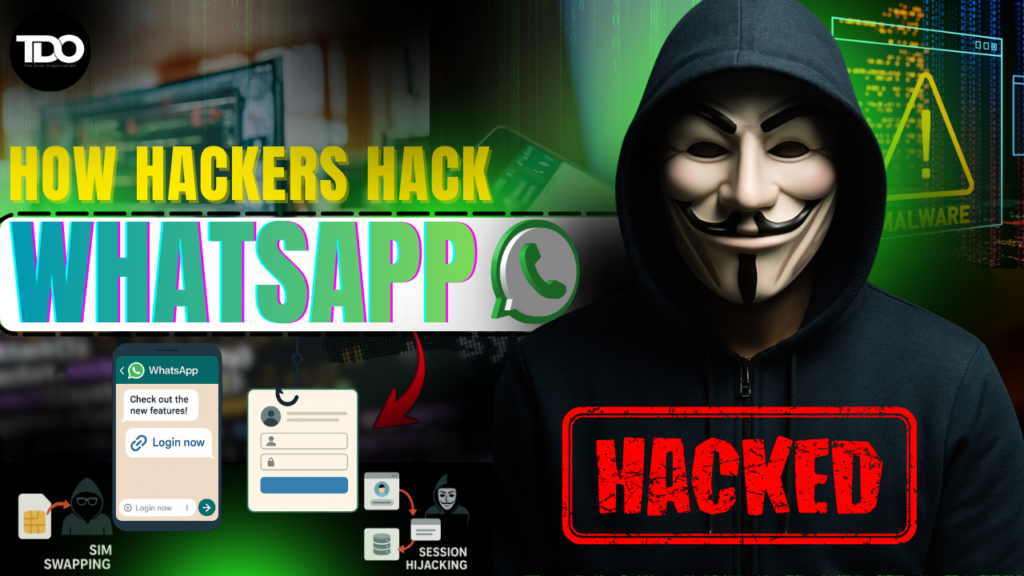
Understand how to hack WhatsApp account ethical hacking is used to demonstrate security flaws, help prevent attacks, and strengthen WhatsApp privacy settings. In today’s digital world, security is crucial. With billions of users, WhatsApp is home to some of our most private and private correspondence. Despite the platform’s strong end-to-end encryption, no system is completely safe from attack, particularly when the human user is the weakest link. This manual examines ethical hacking, a legal, defensive cybersecurity technique. Knowing how to hack WhatsApp account ethical hacking techniques is the first crucial step towards creating unbreakable defenses, whether you are a security expert, researcher, or just someone looking to strengthen your digital life. Also Read:- A Guide to Ethical Hacking Course Fees in 2025 The White Hat Perspective on Ethical Hacking The word “hacking” is frequently used negatively and is connected to illegal activity. On the other hand, ethical hacking—also known as “white hat” hacking—is a highly esteemed professional field. With the owner’s express consent, ethical hackers legally and methodically investigate weaknesses in a system, application, or network. Their objective is to strengthen the system against malevolent “black hat” attacks through identification and remediation rather than exploitation. Learning how to hack WhatsApp account ethical hacking techniques is crucial for penetration testing, or pen-testing, for a security expert interested in secure messaging apps. This includes testing the user’s configuration integrity, device security, and resilience against typical social engineering schemes. Getting Around the Ethical and Legal Framework Establishing a non-negotiable principle is essential before using any techniques: Accessing any private account or system without authorization is prohibited, immoral, and subject to harsh legal repercussions. The theoretical attack vectors and defense mechanisms covered in this article are limited to sanctioned testing environments (e.g., testing your own device or a system where you have written permission to perform pen-tests). The following guidelines must be followed by anyone looking into how to hack WhatsApp account ethical hacking: Understanding implementation flaws rather than flaws in the fundamental E2E protocol is the true goal of legitimate research into how to hack WhatsApp account ethical hacking. Why Direct Server Hacking Is Not Possible? The Signal Protocol, which offers end-to-end encryption (E2EE), is WhatsApp’s main defense mechanism. Important Security Features: A malevolent actor cannot easily access message content by breaching WhatsApp’s central servers due to E2EE. As a result, the user, the device, or the access session are the targets of nearly all successful compromises that an ethical hacker would look into. Understanding Typical Attack Vectors Experts concentrate on the weakest links in the security chain when investigating how to hack WhatsApp account ethical hacking. Black hat actors primarily target these vectors: (A) Phishing and Social Engineering (The Human Factor) This is the most popular and efficient way to gain unauthorized access. The user is tricked by attackers into voluntarily divulging the crucial six-digit verification code. (B) Carrier Weakness: SIM Swapping A high-level threat known as “SIM swapping” occurs when an attacker persuades the victim’s mobile provider to transfer the phone number to a SIM card under their control. (C) Hijacking a WhatsApp Web or Desktop Session A QR code scan is used to authenticate a user’s session when using WhatsApp Web or Desktop. The Web/Desktop session may be taken over if the device used for it is left unattended or has malware on it. (D) Exploits on Local Devices (Root Access and Spyware) Although they are uncommon, flaws in the iOS or Android mobile operating systems can be used to install potent surveillance tools like Pegasus. The Methodology of Ethical Hacking for WhatsApp Defense The professional looking to learn how to hack WhatsApp account ethical hacking adheres to a rigorous process intended for defensive hardening and vulnerability disclosure: A. Reconnaissance and Enumeration The target (user, device, or organization) is the subject of intelligence gathering by the ethical hacker. This entails locating phone numbers, connected services, cloud backup setups, and publicly accessible information that might be exploited for social engineering. B. Vulnerability Assessment and Penetration Testing During this phase, known attack vectors are actively used to try to compromise the system, but always in a controlled, non-destructive environment. C. Reporting and Corrective Action The most important step is this one. The approved conclusions are recorded, severity ratings are given, and prompt defense measures are offered. This reporting stage should take precedence over exploitation for anyone looking into how to hack WhatsApp account ethical hacking. Security experts generally come to the conclusion that user awareness and device security are far more crucial than the E2EE integrity of the application. Useful Defense: Overcoming the Ethical Hacking Exam Implementing defenses that render the attacker’s task impossible is the best way to comprehend how to hack WhatsApp account ethical hacking. 1. Turn on two-step authentication (2FA). Right away This is the best defense you have. You must generate and maintain a unique, six-digit PIN in order to use WhatsApp’s 2FA. How it works: Without this 2FA PIN, an attacker cannot activate your account on a new device, even if they are successful in swapping SIM cards or stealing your SMS code. Ninety percent of social engineering and SIM-swapping attempts are thwarted by this. 2. Keep Your Six-Digit SMS Code Safe Under no circumstances should you divulge the six-digit registration code to anyone. This code will never be requested by WhatsApp, your carrier, or official technical support. 3. Safe Web Sessions on WhatsApp When you’re done using WhatsApp Web/Desktop, always log out, especially if you’re using a shared or public computer. Check “Linked Devices” in the WhatsApp settings on a regular basis, and delete any sessions you don’t recognize. 4. Protect Your Device (The Basis) The device is the weakest link, so make sure: 5. Make Use of Encrypted Backups Make sure you enable the End-to-End Encrypted Backup function in WhatsApp settings if you use cloud backups (iCloud or Google Drive). This keeps your message history safe even in the event that your cloud account is hacked. Conclusion: Understanding Vulnerability to Master Defense Knowing how
Ethical Hacking: A Complete Guide for Beginners
The digital world is a battleground in today’s hyperconnected society. Malicious actors target governments, companies, and people every day in order to take advantage of weaknesses for personal benefit. Reports of ransomware attacks, identity theft, and data breaches are common in the news, which are making us all feel a little more vulnerable. However, what if it were possible to retaliate not with more advanced weaponry but rather with a better comprehension of the enemy’s strategy? This is exactly the situation in which the unpredictable field of ethical hacking is useful. The term “ethical hacking” may have caught your attention. Perhaps the thought of applying your technical expertise to safeguard systems rather than jeopardize them excites you. Or maybe you just want to know how ethical hacking works and why it’s becoming more and more significant in our digital lives. You’ve arrived at the ideal location, regardless of your reason. This in-depth manual will demystify ethical hacking, outline its vital function, and—above all—provide an answer to the most pressing query: Can I learn ethical hacking online? Ethical hacking: What Is It? Fundamentally, ethical hacking, sometimes referred to as penetration testing or white-hat hacking, is the act of purposefully trying to compromise computer networks, systems, or applications. One important distinction is that it is carried out with the owner of those systems’ express consent and with the intention of locating security flaws before malevolent actors can take advantage of them. Consider it as a highly qualified cybersecurity detective who is hired to identify potential entry points and weaknesses used by a real burglar and then report them so that they can be fixed. Ethical hackers follow a strict code of conduct, in contrast to their malevolent counterparts, known as black-hat hackers. They are not motivated by malice, greed, or any desire to hurt others. Rather, protection is what drives them. They employ the same methods, tools, and strategies as malevolent hackers, but they do so in a positive way. In addition to highly developed technical abilities, this calls for a strong sense of integrity and a dedication to responsible disclosure. What Makes Ethical Hacking So Vital? Professionals with expertise in ethical hacking are more needed than ever. Both the threats and the digital world are always changing. Advanced persistent threats (APTs), zero-day exploits, and social engineering techniques are some of the increasingly complex strategies used by cybercriminals to get around conventional security measures. Ethical hackers can help close the gap in this situation. In today’s digital environment, ethical hacking is essential for the following reasons: The Penetration Testing Lifecycle and How Ethical Hacking Operates What is the actual process of ethical hacking? The procedure, which is frequently called the penetration testing lifecycle, is generally organized and adheres to a specified methodology. Although particular steps may differ based on the goals and scope, the following is a typical breakdown: Because of this methodical approach, ethical hacking is guaranteed to be a controlled and methodical process with the goal of improving security rather than a chaotic free-for-all. Is It Possible to Learn Ethical Hacking Online? The answer to the question that probably led you here is a resounding YES! Education has become more accessible in the digital age, and ethical hacking is no different. There is no doubt that ethical hacking can be learned online, and the resources are more extensive and plentiful than ever. The days of needing to attend pricey in-person bootcamps or pursue formal degrees to acquire advanced cybersecurity skills are long gone. Aspiring ethical hackers now have a plethora of options thanks to the internet. Here’s how to start your educational journey: Crucial Elements of Online Education Online ethical hacking education is very accessible, but it’s important to approach it with the correct attitude and recognize the dedication needed. The Path of an Ethical Hacker: Competencies to Develop You must acquire a wide range of skills in order to become an ethical hacker. Knowing how to operate a particular tool is not enough; you also need to comprehend the underlying ideas and know how to use them creatively. Here are some crucial areas to pay attention to: Starting the Journey: Your Ethical Hacking Adventure Is About to Begin At first, the field of ethical hacking may appear intimidating, but keep in mind that all professionals were once novices. Ethical hacking is definitely something you can learn online, and the process is very fulfilling. It’s a field that provides intellectual challenge, ongoing education, and the chance to truly contribute to safeguarding our digital world. Start by looking through the available internet resources. Immerse yourself in the cybersecurity community, try out virtual labs, and enroll in introductory courses. Have self-compassion, acknowledge your accomplishments, and never stop learning. Perhaps you are one of the guardians needed for the digital fortress. Want to start your learning journey on Cyber Security and Ethical Hacking field?