
5 Powerful Cybersecurity Careers You Didn’t Know Existed in 2026
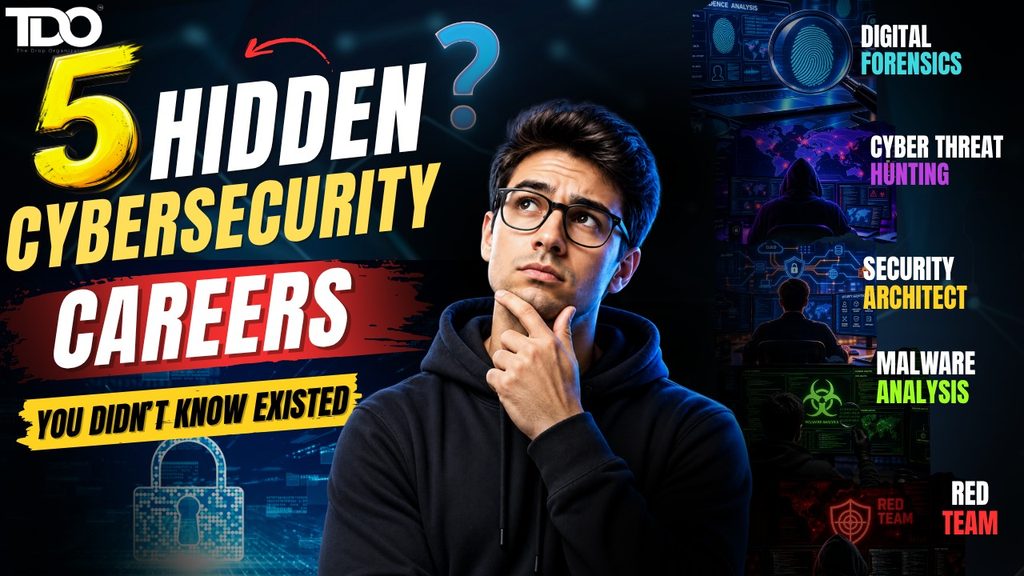
Discover 5 exciting cybersecurity careers beyond ethical hacking, including threat hunting, digital forensics, malware analysis, AI security and risk analysis. When people hear the words cybersecurity careers, they often imagine a hacker, sitting in a dark room, typing commands on multiple screens, trying to break into a computer system. Of course, movies have popularized that image. But the real cybersecurity industry looks very different—and frankly it is a lot more interesting. Cybersecurity is no longer simply about penetration testing, antivirus software, or monitoring suspicious network traffic. As businesses migrate to the cloud, artificial intelligence becomes a part of the day-to-day work, digital investigations are getting more complex, and cyberattacks become more financially damaging, organizations require professionals with highly specialized knowledge. This has created an increasing diversity of cybersecurity careers that many students and beginners have never even heard of. You might be surprised to learn that a person working in security could spend their day investigating digital evidence, hunting for threats that have not yet triggered an alert, analyzing malware, securing artificial intelligence systems or helping organizations understand the financial consequences of a cyberattack. And that is exactly what makes this field so exciting. If you are thinking about a career in ethical hacking, information security or technology, do not restrict yourself to the job titles you already know. There’s a much bigger world than the classic “ethical hacker” or “security analyst” role. In this guide, we’ll be looking at 5 cybersecurity careers that need much more attention. We’ll look at what these professionals do, the skills they need, who can get into these fields and how you can start preparing for them. Also Read:- The Human Firewall: Why Strong Cybersecurity Starts with You in 2026? Why Are There So Many Cybersecurity Careers Today? Before diving into these lesser-known roles, it helps to understand why the cybersecurity job market is so varied. Think about how organizations work today. The company might have websites, mobile apps, cloud infrastructure, remote employees, AI tools, customer databases, payment systems, IoT devices, and hundreds or thousands of employee accounts. Each of these technologies has a potential security responsibility. You can’t have one security team doing everything the same way anymore. Organizations need specialists with knowledge of specific technologies, attack methods, regulations, investigations, and business risks. That’s why the modern cybersecurity careers go far beyond traditional security operations. Some experts halt attacks. Others study them. Some look for hidden attackers inside networks. Others reverse-engineer malicious software, or help companies understand what went wrong after an incident. There are also jobs that blend cybersecurity with law, psychology, artificial intelligence, finance, and business management. It means that building a cybersecurity career doesn’t necessarily mean you have to be a person who likes to sit in front of a terminal all day. Your existing interests can actually help you find your niche. Modern cybersecurity careers go far beyond traditional security operations. 1. Cyber Threat Hunter: The Job That Tracks Down Hackers Before They Are Found Suppose a burglar has entered a building but the alarm system has not yet been activated. A traditional security system might wait for an alarm. A threat hunter does something different. They move through the building, looking for anyone who looks out of place. That’s what a cyber threat hunter really does. Threat hunting is one of the most interesting aspects of modern cybersecurity as it involves pro-actively searching for attackers, suspicious behavior and indicators of compromise within an organization’s environment. Instead of waiting for a security alert to pop up, threat hunters ask questions such as: “Could an attacker already be inside the network?” “Is there unusual activity that our automated detection systems have missed?” “Does this behavior match a known attack technique?” This makes threat hunting one of the more investigative careers in cyber security out there today. What is a Threat Hunter? As a threat hunter, you usually have to deal with huge volumes of security data. This may include endpoint activity, authentication logs, network traffic, cloud activity, DNS requests, process information and security alerts. They look for signals that bad things are happening. For example, let’s say an employee normally logs in from Kolkata during business hours. Suddenly the account starts authenticating from another country at 3:00 AM, accesses unusual resources, and starts downloading massive amounts of data. Then a threat hunter would investigate if this is compromised credentials, legitimate travel, automated activity, or something more serious. Curiosity is needed for the work, because often there is no simple “correct answer” at the beginning of an investigation. Skills that can help you get started in threat hunting: Threat hunting can be particularly rewarding for students who like to solve puzzles, explore unusual behavior, and understand how attackers operate. 2. Digital Forensics Investigator: Solving Crimes With Digital Evidence Have you ever watched a crime investigation show where investigators use fingerprints, CCTV footage, and physical evidence to piece together what happened? Now imagine doing something similar, but with computers, smartphones, servers, cloud accounts and digital storage. Welcome to digital forensics. A digital forensics investigator looks at electronic evidence to determine what happened in a security incident or investigation. They could look at hacked computers, stolen data, suspicious files, deleted information, unauthorized access, or other types of digital activity. This is one of the most unique cybersecurity careers for professionals as it is a mix of technology and investigation and evidence analysis. What Does Digital Forensics Involve? Consider an organization that learns confidential documents were copied from an employee’s computer. The investigator cannot just assume that the employee stole them. Instead, they have to look at the evidence that is available. What dates were the files accessed? What account was used? Was a USB device attached? Were files compressed or copied? Were there any suspicious programs running? Did the data transfer over the network? Were files deleted afterward? Digital forensic investigators use specialized techniques to answer such questions. They may examine disk images, file systems, metadata, system logs, browser history, memory captures, email records
The Human Firewall: Why Strong Cybersecurity Starts with You in 2026?
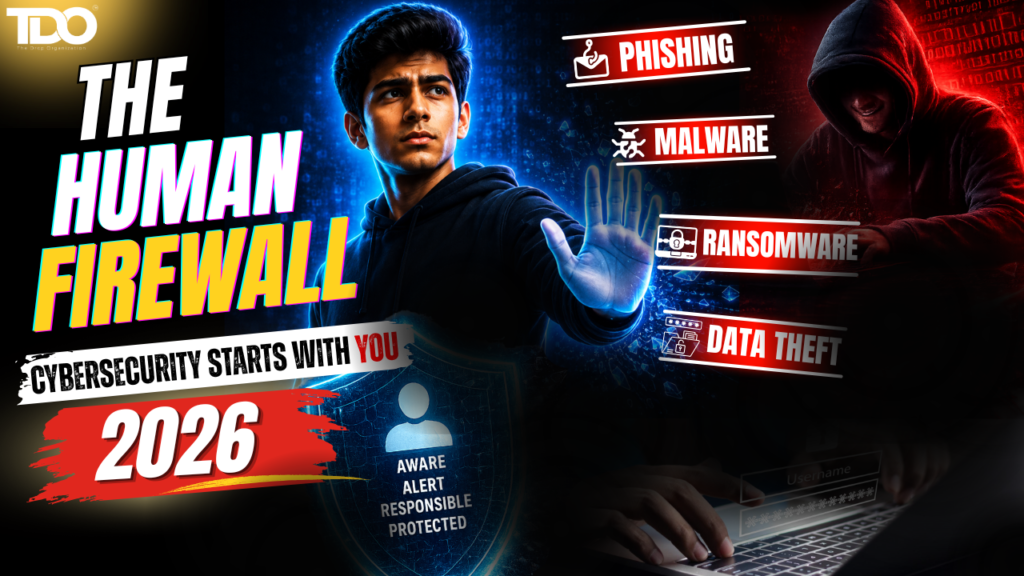
Discover why the human firewall is the strongest defense against cyber threats. Learn how cybersecurity awareness, smart online habits, and digital responsibility can protect you and your organization from modern cyber attacks. Imagine entering a building secured by biometric scanners, CCTV cameras, security guards and high tech alarm systems. “Every entry is watched, every visitor is checked, every step is noted. It’s almost impossible for an intruder to gain access, on the face of it. Now picture a stranger approaches an employee outside the building and says, “I forgot my access card. Please hold the door for me, okay?” The employee smiles and opens the door, wanting to be helpful. All of these costly security precautions come to nothing in a matter of seconds – not because the technology failed but because a person made an innocent decision. This is one of the simplest examples of why the concept of a human firewall has become one of the most significant discussions in contemporary cybersecurity. When most people think of cybersecurity they think of antivirus software, firewalls, encryption or advanced hacking tools. These technologies are important, but they often miss one important fact: The user of the security system is typically the strongest or weakest link in any security system. Every day hackers do millions of attacks across the world. Surprisingly, many of them don’t start off by attacking computers. Instead they go after people. They send believable emails, bogus job offers, fraudulent payment requests and real looking login pages. Not because software is feeble but because human behaviour is often easier to manipulate. That’s why organizations across the globe are investing not only in technology, but also in building a human firewall. It’s not software – a human firewall. A person with the awareness, knowledge and confidence to identify online dangers before they become security incidents. Cybersecurity doesn’t begin at the computer in today’s digital world. It starts with you. Also Read:- 4 Cybercrime Psychology Secrets: Why People Get Hacked? What Is a Human Firewall? The human firewall is a term used to describe people who are actively protecting themselves and their organization by making smart decisions around cybersecurity. A human firewall acts like a traditional firewall filtering bad network traffic, but filters bad email, bad links, unexpected calls and strange online activities before they do damage. Let’s put it this way. Technology can stop many known attacks. But technology can’t always tell you whether to trust a message claiming to be from your bank. It cannot tell if an email asking for an urgent payment is genuine. Sometimes it does not know when someone is trying to play on your emotions. Enter the human firewall. One important question can help a smart employee, student or web user to prevent an attack: “This looks legit?” That one moment of awareness can sometimes thwart financial fraud, identity theft, ransomware infections, or data breaches. Why Cybersecurity Isn’t Just About Technology Anymore? For many years, cybersecurity was almost entirely focused on technical defenses. Companies bought antivirus software. Firewalls installed. Configured intrusion detection systems. Encrypted sensitive information. These measures are still important, but cybercriminals have evolved. Instead of attacking the technology directly, they began attacking the people using it. Think about investing millions to protect your company’s servers, only to have an employee unknowingly distribute login credentials with a phony email. The technology worked perfectly. The attack worked because of how people behave. That is precisely why the concept of the human firewall has grown more and more significant. Today’s cybersecurity professionals know that it’s not enough to protect computers. People must also understand how cyber attacks work. They need to know. They need to think critically. But most importantly, they need confidence to question suspicious situations. Why Humans Are the First Line of Defense? Cybersecurity is often mistakenly viewed as an IT department responsibility. In fact, anyone who uses a smartphone, laptop, email account or social media is part of an organization’s cybersecurity strategy. Every employee, every student, every teacher, every business owner, every internet user, every choice they make builds up a feeling of safety or exposure. A good human firewall can spot the warning signs before clicking on a suspicious attachment. They check for unexpected requests. They make good passwords. They support Multi Factor Authentication. They report unusual activity rather than ignoring it. In most cases, these simple actions will stop attacks before cybersecurity software is ever involved. This is why more and more experts are talking about people as the first, and often most important, line of defense. The Costliest Cybersecurity Mistake Isn’t Technical Suppose you posed the question: “What is the greatest cyber security threat today?” Most people would say: Malware, Ransomware, Hackers, Viruses, Artificial Intelligence. These are all serious threats, but cybersecurity reports keep pointing to another issue: A human error. Clicking the wrong link, sharing confidential information, using weak passwords, not paying attention to software updates, accessing open WiFi., downloading apps from unknown sources. Each one of these seemingly small choices can open the door for attackers. This is not to say people are careless. It just means people are busy. We’re distracted. We’re curious. We’re emotional. Most people don’t realize how well cybercriminals understand these behaviors. That’s why building a human firewall is no longer optional. It’s becoming a necessity. Hackers Don’t Hack Computers First- They Hack People One of the greatest myths regarding cybersecurity is that hackers spend all their time writing complex code. In reality, many successful cyber-attacks start with a simple chat. A fake email. A scam phone call. A convincing LinkedIn message. A QR code placed in a public location. A social media advertisement. Each attack is carefully crafted around human psychology. Attackers know people trust known brands. They know students react quickly to internship opportunities. They know that employees fear the loss of access to company accounts. They know that panic breeds urgency, Cybercriminals often try to convince people to bypass security software, not try to beat it. And that’s
Public Wi-Fi Security in 2026: The Hidden Dangers of Free Wi-Fi Every User Should Know
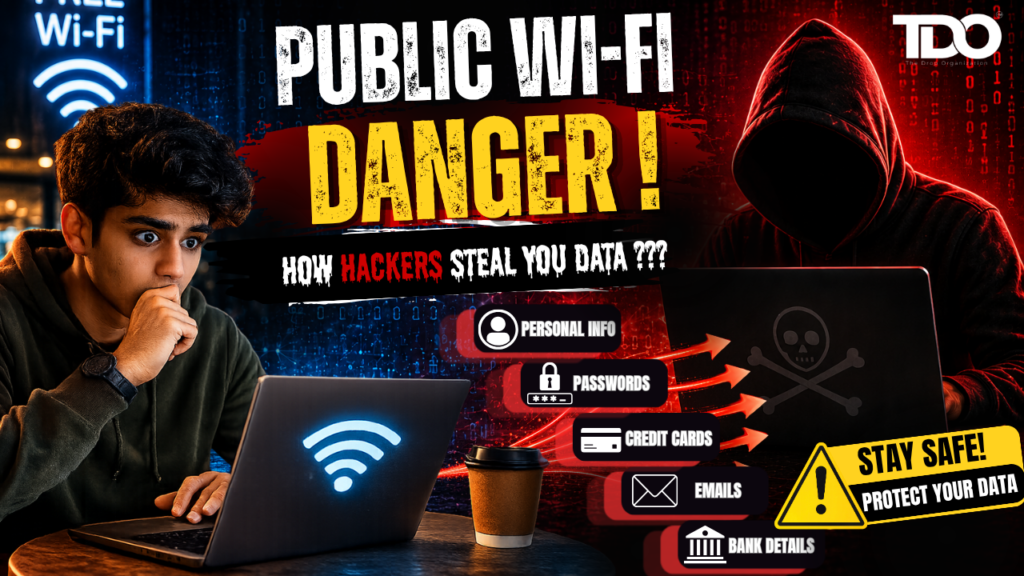
Protect your data with strong public Wi-Fi security. Learn how hackers exploit free networks and discover practical tips for safe internet browsing. Imagine yourself sitting in your favorite coffee shop. You order a coffee, open your laptop, and sign into the free public Wi-Fi network. You’re checking emails, online banking, scrolling through social media, maybe even making a digital payment in seconds. That sounds useful. It feels like it’s normal. It feels safe. But what if, just a few tables away, someone is secretly watching what you do on the Internet? What if the Wi-Fi network you’re connected to isn’t really the café’s? What if your passwords, banking information and personal messages are being intercepted without your knowledge? This isn’t a Hollywood cyber security scene. It happens every day, all over the world. Public Wi-Fi security networks are a regular part of modern life as the internet becomes more and more accessible. Free internet access is provided in airports, hotels, restaurants, shopping malls, railway stations, educational institutions and public spaces. These services are very convenient but they also have serious cybersecurity risks. This is the reason why public Wi-Fi security has become one of the most relevant topics in cybersecurity in recent years. Most of us log on to public networks without giving much thought to the dangers. Unfortunately, cyber criminals are well aware of this behavior. They target public Wi-Fi users actively. Unsecured networks often offer easy opportunities to steal sensitive information. It’s not only cybersecurity professionals who need to understand public Wi-Fi security anymore. Understanding how these networks operate and how hackers take advantage of them is essential for every student, professional, business owner, and internet user. In this guide we’ll explore the unseen dangers of public Wi-Fi, understand how hackers steal data and what you can do to stay safe when using public networks. Also Read:- Cybersecurity for Students: Why Learning Digital Security Is No Longer Optional in 2026 Why Is Public Wi-Fi Everywhere? The desire to be connected to the Internet has never been greater. People need to access the internet for online classes, remote work, social media, banking, shopping, streaming services, as well as for communication purposes. To attract customers and improve convenience, businesses frequently provide free Wi-Fi services. Today, you can find free internet access in airports, cafés, restaurants, hotels, libraries, colleges, shopping centers, railway stations and many such places. These services are easy, but they don’t always provide strong public Wi-Fi security. Many users think that if a network needs a password it must be secure.Unfortunately, that assumption is often incorrect. Why Hackers Like Public Wi-Fi Networks? Public Wi-Fi networks have become a favorite hunting ground for cybercriminals, as they offer something hackers always look for – access to a large number of potential victims in one place. From an airport, railway station, shopping mall, coffee shop or a college campus these networks typically have hundreds of connected devices at a time. Most users connect without a second thought about security, thinking that a publicly available network has to be safe. Sadly, that assumption can be dangerous. Hackers know that public Wi-Fi networks are often set up for convenience rather than security. Public Wi-Fi networks often don’t have the sophisticated protection mechanisms protected home or corporate networks. This creates opportunities for attackers to intercept communications, monitor online activity and steal valuable data. For a cybercriminal, attacking a public Wi-Fi network can be a lot more effective than attacking people one at a time. To avoid falling victim to the various scams, anyone who regularly connects to free internet services should know how to secure their public Wi-Fi security. Hackers are especially interested in: Public Wi-Fi networks are often poorly secured, and attackers can take advantage of the information with relatively little effort. Most Common Security Threats on Public Wi-Fi A lot of people think you need to be a master hacker to launch a cyber attack. In fact, some of the attacks against public Wi-Fi users are surprisingly simple. Let’s examine the most common threats. 1. Man in the Middle (MITM) Attacks The Man-in-the-Middle attack is one of the most dangerous threats to public Wi-Fi security. In this attack, a hacker secretly inserts themselves between your device and the website or service you’re trying to visit. Your data has to go through the attacker’s system before it talks to the actual website you wanted to visit. This permits the hacker to: Most victims never know that they are under attack. 2. Rogue Wi-Fi Networks (Evil Twin Attacks) Have you ever seen multiple public Wi-Fi networks with the same or similar names? For instance: Cybercriminals often set up fake networks that look a lot like real ones. This technique is called an Evil Twin attack. A user connects to the attacker’s network thinking it is legitimate. Once the hacker is connected, he may: This attack highlights the importance of education on public Wi-Fi security. 3. Packet Sniffing Data sent over a network is broken down into small pieces called packets. Data transmitted over a network is broken down into small pieces called packets. Packet-sniffing tools are used by hackers to capture and analyze this data. Attackers can potentially intercept weak public networks usernames, passwords, browsing history, emails or session tokens. Encryption helps to reduce this risk, but many users still visit insecure websites and apps. Strong public Wi-Fi security practices help minimize exposure to packet-sniffing attacks. 4.Malware Distribution Public Wi-Fi networks can also be a delivery mechanism for malware. Attackers might redirect users to infected websites, exploit browser vulnerabilities or trick users into downloading malicious files. Once installed, malware can record keystrokes, steal data, encrypt files and even monitor activities. This makes public Wi-Fi security an essential aspect of cybersecurity awareness in general. 5. Session Hijacking When you log into a website , the website creates a session that keeps you logged in. Sometimes hackers can steal these session tokens. If they succeed, they might gain access to your social media accounts, your
Social Media Hacks Exposed: 7 Powerful Safety Tips to Protect Your Digital Life
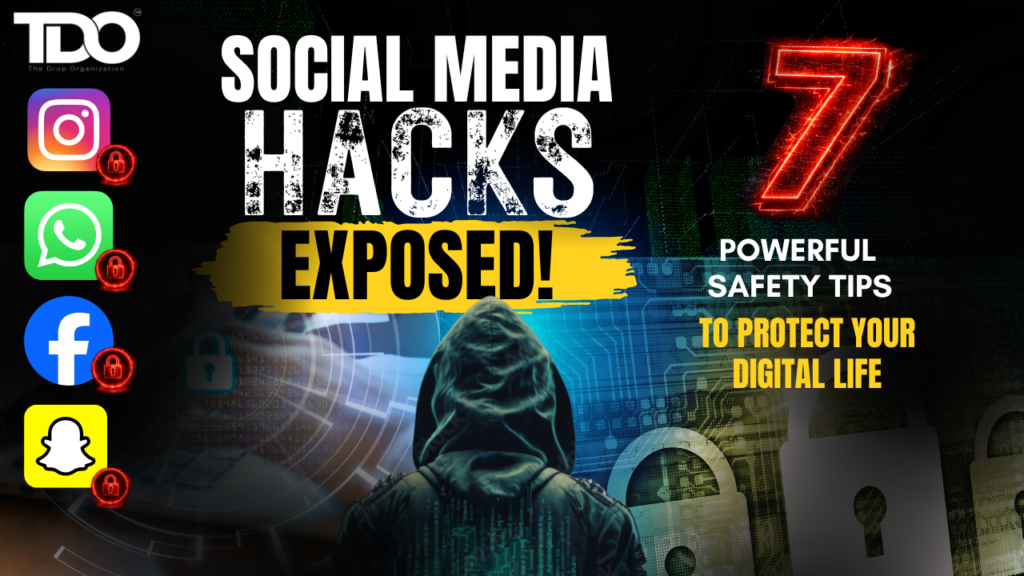
Discover the most common social media hacks and learn 7 powerful safety tips to protect your accounts from cybercriminals. Stay secure online with expert cybersecurity awareness from The Drop Organization (TDO). Social media is now a huge part of our everyday lives. From sharing pictures and chatting with friends to running businesses and building careers, platforms like Instagram, Facebook, WhatsApp, LinkedIn, Snapchat and X are ingrained in how we communicate online. But while social media brings convenience and connectivity, it also brings opportunity for cybercriminals. Thousands of social media accounts are hacked every day worldwide. Some people lose personal data, some lose money, some lose access to their business, private images, even their online identity. What makes this even more dangerous is that many victims are never aware of how the attack actually happened. Hackers can get into your social media accounts with a weak password, a fake link or an unsecured Wi-Fi connection. Today’s cybercriminals are more clever, faster and more manipulative than ever before. That’s why learning about social media security isn’t an option anymore. Whether you’re a student, content creator, business owner, influencer or just a regular internet user, keeping your social media accounts safe needs to be a priority. In this comprehensive guide, we’ll break down how social media hacks occur and share 7 powerful safety tips to help protect your digital life from cyber threats. TDO is educating students about cybersecurity awareness and ethical hacking to help students learn how modern cyberattacks work and how to protect themselves against them effectively. TDO’s hands-on cyber training prepares learners to be safe in the digital world of today. Also Read:- Top 7 Benefits of an Ethical Hacking Course for Future Cybersecurity Professionals What Are Social Media Hacks? Social media hacks are illegal or manipulative use of certain techniques to get someone’s account, private data or online identity. Hackers target social media accounts for many reasons such as: Hackers attack systems using technical methods directly in many cases but manipulate human behavior instead. This is known as social engineering. Most social media hacks are caused by users unknowingly making small security mistakes. Why Social Media Accounts Are Easy Targets for Hackers? Many people think that only the rich and famous or corporations get hacked. In fact, regular users are often easier to target because they often have weaker security. Here are some common reasons for social media hack account takeover: Hackers know that humans are often the weak link in cybersecurity. That’s why cybercriminals work so hard to exploit your trust, your curiosity, your fear and a sense of urgency. The Rising Threat of Social Media Cybercrime Social media cyber crime is rapidly growing worldwide. Fake giveaways, phishing messages, account takeovers, impersonation scams, and malicious links are all on the rise. Today, hackers use advanced techniques like: As cyberattacks grow more sophisticated, users will need to be smarter and more security conscious. This is where cybersecurity awareness plays a very important role. Students at The Drop Organization (TDO) learn how hackers exploit vulnerabilities and how ethical hacking techniques can help organizations and individuals protect themselves from modern digital threats. 1. Create Strong & Unique Passwords for Each Social Media Account One of the biggest mistakes people make is using simple or repetitive passwords across multiple accounts. Hackers use automated tools that can test millions of common password combinations in seconds. Passwords such as: can be cracked in a split second. Even worse, if a website is compromised and you use that password with other sites, the hackers can access all your linked accounts. How to Make Strong Passwords? A strong password should include: Example of a strong password: TDO#Cyber2026!Secure Avoid using birthdays, phone numbers , pet names or simple words. Password managers can also assist you in creating and securely storing complex passwords. Strong passwords are your first line of defense against social media hacks. 2. Activate Two-Factor Authentication (2FA) If you’re not using two-factor authentication, your account security is half assed. Two-factor authentication adds an extra layer of security by requiring you to perform a second verification step after you enter your password. Even if hackers get your password, they still can’t get into your account without the second authentication factor. Popular 2FA techniques include authentication apps, SMS OTPs, email verification & security keys. Using Google Authenticator or Microsoft Authenticator is safer than SMS-based verification, as phone OTPs can be circumvented with SIM-swapping attacks. The Importance of 2FA Imagine your password being stolen in a data breach. Without 2FA, hackers can instantly sign in to your account. But with 2FA activated, the attacker still requires your second verification code. This one feature alone can stop a massive percentage of account takeover attacks. 3. Don’t click on suspicious-looking links or messages Phishing is one of the most common hacking methods on social media. Phishing attacks fool users into entering their login credentials on fake sites that look real. Hackers often send messages such as: The links typically lead users to fake login pages to steal credentials. How to Prevent Phishing Attacks? Before clicking on a link: Hackers rely on panic and curiosity. Slowing down before clicking anything suspicious can save your account. At TDO, students of ethical hacking learn how phishing attacks are made and how cybersecurity professionals spot fake websites and malicious campaigns. 4. Do not log onto social media on public Wi-Fi Public Wi-Fi networks in cafes, airports, hotels or malls are convenient but often insecure. Hackers can create fake Wi-Fi hotspots or intercept traffic on unencrypted networks to steal login credentials. This kind of attack is called: Man-in-the-Middle (MITM) Attack. In such attacks cybercriminals secretly listen to the communication between your device and the internet. How to Stay Safe on Public Wi-Fi? Cybersecurity experts always recommend using secure private connections when possible. 5. Think twice before posting online Sharing a lot of personal information on social media can help hackers build detailed profiles about you. This information can then be used for password guessing,
India’s Fastest Growing Cyber Security Training Company: The Drop Organization (TDO)

Looking for a Cyber Security Training Company? Learn how practical training and real-world experience can help you build a successful cybersecurity career. Every successful endeavor begins with an issue and a plan to address it. Cyber threats are changing more quickly than ever in the modern digital world. Despite their curiosity, enthusiasm, and eagerness to learn cybersecurity, students frequently find themselves caught between out-of-date courses, a lack of real-world experience, and an unclear career path. This is precisely where The Drop Organization (TDO), cyber security training company, came into play—not just as another training facility, but as a platform with a mission to turn novices into proficient cybersecurity experts. TDO’s rise is not coincidental. It is the outcome of a potent mix of career-focused training, mentorship, and hands-on learning that is revolutionizing cybersecurity education in India. An Idea Beyond Conventional Education The Drop Organization, cyber security training company, promotes learning by doing, in contrast to many institutions that only concentrate on theory. The objective is to provide students with real-world cybersecurity experiences in addition to concept explanations. Students are trained through: One of the main causes of TDO’s explosive growth is that this method guarantees that students experience cybersecurity rather than just comprehend it. A Complete Learning Ecosystem The Drop Organization, cyber security training company, makes learning accessible and flexible by offering both online and offline courses in digital marketing, ethical hacking, and cybersecurity. Regardless of a student’s preference for online or in-person instruction, TDO guarantees a planned and supervised experience. It stands out because of its intense emphasis on: After completing the program, students receive certificates and internship opportunities that help them establish a solid foundation for their careers and gain exposure to the industry. Because of this, TDO is particularly helpful for newcomers who have little to no experience in the field. Cybersecurity Courses with an Industry Focus The Drop Organization’s career-focused programs, which are intended to advance students from beginner to advanced levels, are the foundation of its success. The Hack Track (For Beginners – Cybersecurity) The Hack Track is designed for beginners who are entering cybersecurity for the first time. It provides a clear roadmap that helps students build a strong foundation step by step. Key benefits: This program ensures that students start their journey with clarity and confidence. DCSC (Drop Certified Security Course – Advanced Cybersecurity) The DCSC program is built for learners who want to reach an advanced level in cybersecurity and ethical hacking. It includes: This course prepares students to become highly skilled cybersecurity professionals, ready for real-world challenges. DCMC (Digital Marketing Certified Marketing Course) The DCMC program, which focuses on digital marketing, provides students who wish to pursue careers in the field with a comprehensive career path. Students learn: This course helps students develop creative and data-driven marketing skills, opening doors in one of the fastest-growing industries. Practical Exposure That Builds Confidence TDO’s practical-first learning approach is one of the main factors contributing to its explosive growth. The Drop Organization, cyber security training company, makes sure that students are actively involved in real-world experiences that reflect industry scenarios rather than restricting them to theoretical knowledge. Students practice, experiment, and execute in addition to learning, which has a big impact on their confidence and comprehension. During the training, they participate in: This immersive learning environment guarantees that students are gaining practical skills, problem-solving abilities, and the self-assurance needed to function in real-world scenarios rather than merely memorizing concepts. Mentoring and Ongoing Assistance Digital marketing and cybersecurity can initially seem overwhelming. TDO, cyber security training company, ensures that no student feels stuck by providing ongoing mentoring and sessions for clearing doubts. Throughout their journey, students are guided by knowledgeable instructors who help them maintain consistency and focus. Opportunities and Training with a Career Focus The Drop Organization, cyber security training company helps students get ready for real careers in addition to teaching. Students are assisted with: Students can more easily and confidently transition into professional roles as a result. Reasons for Rapid Growth of TDO The Drop Organization’s explosive expansion can be ascribed to: TDO, cyber security training company, is extremely effective and relevant in the current competitive environment because of this combination. The Drop Organization and Its Future The need for qualified experts in cybersecurity and digital marketing will only increase as cyberthreats increase and digital companies grow. With real skills, real-world experience, and career-focused education, the Drop Organization is actively preparing students to meet this demand. The Drop Organization, cyber security training company, is redefining education in addition to expanding. TDO helps students confidently transition from novices to professionals by combining hands-on training, organized programs, career support, and mentorship. Learners have the skills necessary to thrive in the real world, whether they are studying digital marketing or cybersecurity. For precisely this reason, The Drop Organization, cyber security training company, is emerging as the fastest-growing cybersecurity training provider in India. Want to start your learning journey on Cyber Security and Ethical Hacking field?