
Ethical Hacking vs Cybersecurity: The Powerful Difference Explained in 2026
Confused about ethical hacking vs cybersecurity? Discover the key differences, roles, skills, tools, career paths, salaries, and learning roadmap for both fields. If you are a newcomer in the technology and security industry, you have probably come across two terms more than once: ethical hacking vs cybersecurity. At first glance they can sound almost the same. Both are about protecting computers. Both are about weaknesses. Both employ security tools. Both require technical skills. In either case, there are exciting career paths ahead, and both are often mentioned when people talk about becoming a hacker or cybersecurity professional. So of course one question is asked: What’s the difference between ethical hacking vs cybersecurity? The simplest answer is that ethical hacking is a niche activity within the much broader field of cybersecurity. Cybersecurity is the ability to protect or defend the use of cyberspace from cyber attacks, according to NIST. Its glossary offers a broader definition of cybersecurity as an approach to preventing, managing and recovering from risks affecting electronic information and communication systems. Ethical hackers, however, are trained professionals who have been authorized to test systems and networks for vulnerabilities, often using the same techniques that would be used in real attacks. Ethical Hackers, or penetration testers, are professionals who test systems and networks for vulnerabilities that malicious actors could exploit, according to ISC2. That is a very important distinction between ethical hacking vs cybersecurity. Think of a big company as a city. Cybersecurity is the entire security system protecting that city – security policies, surveillance, access control, emergency response, infrastructure protection, monitoring, risk management and recovery. One specialized team is ethical hacking. They try to get into the city through authorized simulated attacks. They try to find out where the defenses could be improved. Both are important, but they aren’t the same. So in this ethical hacking vs cybersecurity guide we will go through the difference between the two fields, their roles and skills, discuss career options, compare tools and responsibilities and help you decide which route may be right for you. Also Read:- The Dark Side of Digital Marketing Tactics: 7 Manipulative Tactics Consumers Should Know in 2026 What is Cybersecurity? First, to understand ethical hacking vs cybersecurity, we need to understand cybersecurity. Cybersecurity is the broader field of protecting systems, networks, applications, devices and data from malicious or accidental attack, disruption, misuse, modification, destruction and other cyber risks. The NIST definition of information security emphasizes the importance of protecting information and systems to guarantee confidentiality, integrity and availability, also known as the CIA triad. Cybersecurity can, in practice, mean preventing an attacker from gaining access to a network, detecting anomalous activity following an intrusion, securing cloud infrastructure, protecting identities, responding to incidents, investigating malware, managing vulnerabilities, and ensuring an organization can recover following a security incident. That’s the reason why it’s wrong to claim that cybersecurity is just “hacking.” Cybersecurity is an ecosystem. It covers technical controls, people, processes, policies and risk management. One cyber security professional can spend the entire day looking through security logs, not performing a single penetration test. Another professional can spend the day reviewing access permissions or investigating a suspicious endpoint. Some common cybersecurity areas include Network security, Application security, Cloud security, Security operations, Incident response, Digital forensics, Vulnerability management, Identity and access management, Threat intelligence, Governance, risk and compliance, Security engineering, Penetration testing & Ethical hacking. Here is one of the most important points in ethical hacking vs cybersecurity: Ethical hacking is one of the parts of cybersecurity, whereas cybersecurity includes many activities that go beyond ethical hacking. What Is Ethical Hacking? Now let’s look at the flip side of ethical hacking vs cybersecurity. Ethical hacking is the authorized process of testing systems, networks, applications or infrastructure to identify security weaknesses before malicious attackers can exploit them. An ethical hacker thinks like an attacker but stays within the confines of a defined legal and professional scope. That final part is critical. A person who hacks into a system without permission is not an ethical hacker just because they say they are testing security. Authorization matters. An ethical hacker may be authorized by an organization to try to penetrate a web application, network, API, wireless environment, or other technology. The professional looks for weaknesses, documents his findings, and provides information that helps the organization improve its security. That’s why ethical hacking is sometimes called offensive security. The goal is not to hurt the organization. The point is to find vulnerabilities before anyone else does. For example, an ethical hacker might find a weakness in the authentication of an application. Instead of using the vulnerability to get personal benefit, the tester writes down the problem, explains the possible effects and gives evidence so the company can solve it. The line between authorized and unauthorized activity is critical to the profession. According to NIST, a white-hat hacker is a cybersecurity professional who gains access to systems to assess and enhance their security measures. Ethical Hacking vs Cybersecurity: How Are They Different? If there is one thing you should take away from this article of ethical hacking vs cybersecurity, it is this: Cyber security is the umbrella term and ethical hacking is a specialization in that field. A cybersecurity professional might specialize in preventing, detecting, responding to, and recovering from cyber assaults. A penetration tester is an ethical hacker who specializes in vulnerability discovery using authorized offensive techniques. So we can think of the relationship like this: Cybersecurity ↓ Network Security Cloud Security Incident Response Digital Forensics Threat Intelligence GRC Security Operations Application Security Ethical Hacking / Penetration Testing This makes the ethical hacking vs cybersecurity comparison much easier to grasp. There is no parallel universe of cybersecurity called ethical hacking. It’s a branch off the larger cybersecurity tree. Ethical Hacking vs Cybersecurity: Roles and Responsibilities The responsibilities of professionals in the two areas i.e., ethical hacking vs cybersecurity can overlap, but their primary objectives are different. An ethical hacker may be responsible for: A
OTP Scams Explained: 7 Dangerous Tricks Hackers Use to Steal Your Money in 2026
Learn how OTP scams work, how fraudsters trick victims into revealing OTPs, common warning signs, and powerful ways to protect your money from online fraud. You get a call from someone who says they are from your bank. You hear from someone who sounds professional, knows your name, and says you need to do an urgent security verification on your account. A couple of seconds later, you get an SMS with a six digit OTP. “Please share the OTP to complete the verification.” It sounds simple. You may even think that because the caller knows your name, phone number or some basic account information, they must be legitimate representatives of your bank. But this is just where the danger starts. OTP scams are designed around one simple idea: Make the victim voluntarily provide information that can help a fraudster complete an unauthorized transaction or gain access to an account. The technology may be sophisticated, but the psychological trick is often surprisingly simple. The scammer creates urgency, fear, excitement, confusion or trust and then encourages the victim to do something they normally wouldn’t. The Reserve Bank of India has been cautioning customers on several occasions not to share OTP, PIN, passwords, card details or any other confidential banking information with unknown persons. The RBI has also issued specific warnings about fraudsters posing as officials and using alarming claims such as account freezing or deactivation to pressure people into revealing sensitive information. So understanding OTP scams is not just a cybersecurity issue but also an important part of financial safety. In this article, we’ll break down OTP scams — what they are, the psychology behind them, the most common types, why people fall for them, and what to do if you get a suspicious call or if you’ve accidentally given out an OTP. Also Read: How to Start a Cybersecurity Career With No Experience: 7 Powerful Steps to Get Your First Job in 2026 What Are OTP Scams? Before understanding OTP scams, let us understand what an OTP actually is. OTP means One Time Password. It is a temporary code used to verify some transaction, login, account change, registration or other operation. For instance, when you attempt to make a specific transaction, your bank or service provider might send a code to your registered mobile number. The code is meant to prove that the actual account owner is authorizing the action. That is why OTP should be considered as confidential authentication information. An OTP is not simply another ordinary SMS. So if someone asks you for an OTP, the usual correct response is to stop and check what action is being authenticated before doing anything else. The main difference is that many OTP scams don’t involve the attacker “breaking” the OTP system at all. Instead the attacker tries to trick the victim into revealing the OTP. This is an example of social engineering . The criminal isn’t necessarily defeating the technology directly, but rather trying to influence the person using the technology. This makes OTP scams particularly interesting from a cybersecurity point of view, as the weakest link might not be the banking application, the encryption mechanism or the authentication infrastructure, but rather the human decision being made at the other end of the phone. OTP scams are so effective for a few reasons. The reason OTP scams continue to be a threat is that they combine technology with psychology. A fraudster might know that people are more likely to make mistakes when they are scared, rushed, excited or confused. So the scammer sets up a situation where the victim feels like they need to do something right now. Common emotional triggers are: This is why OTP scams are better understood as psychological attacks than just technical attacks. The criminal does not need to convince you that he’s a hacker. They have to persuade you that they can be trusted. Top OTP Scams You Should Know About 1. Fake Bank Verification OTP Scams This is one of the most common types of OTP scams. The victim receives a call from someone who claims to be a bank representative. The caller may say that the victim’s account needs to be verified, the debit card needs to be activated, KYC details need to be updated or suspicious activity has been detected. The dialog is supposed to be official sounding. The scammer might want to know things like: The last request is usually presented as a simple verification step. An OTP has been sent to your phone. “Just give me the number so I can look at your account.” But the OTP may actually be authorizing a transaction or some other security-sensitive action. The victim thus thinks they are going through a security process, when in fact they might be approving something the fraudster has started. The RBI has specifically cautioned that criminals pretending to be officials of the RBI or the government may threaten to freeze or deactivate an account to force a victim to disclose confidential information, including OTP. The best thing to do is simple: Never give an OTP to an unsolicited caller. If you suspect that your bank is really requiring something from you, please reach out to the bank independently via its official website, mobile app, branch or verified customer-care channel. 2. Fake KYC Update OTP Scams KYC related messages are another common theme in OTP scams. You may see a message that says: “Your KYC has expired. Your account will be suspended unless you update it immediately.” The message could include a link, or it may be followed by a phone call from someone claiming to be from a bank, payment service, telecom company or financial institution. The point is to cause panic. Sometimes when the victim responds, the fraudster may direct the victim to a verification process and eventually request an OTP. The issue is not that KYC procedures are inherently suspect. In reality, it’s the financial institutions that do KYC-related processes. The danger lies in allowing
How to Start a Cybersecurity Career With No Experience: 7 Powerful Steps to Get Your First Job in 2026

Learn how to start a cybersecurity career with no experience through 7 powerful steps covering skills, projects, certifications, networking, and job preparation. Imagine yourself looking at a job portal for cybersecurity jobs and you see requirements like networking knowledge, Linux, SIEM tools, penetration testing, cloud security, certifications and previous experience all under the same job description. If you’re a student, recent graduate, career switcher or transitioning from a completely different field, it’s common to look at these requirements and think, “How am I supposed to get experience when every job is asking for experience?” It’s one of the biggest questions that people have when they begin looking at a cybersecurity career. The good news is, when you’re starting a cybersecurity career with no experience, you’re not starting out with zero value. Before you land your first cybersecurity job, you can build knowledge, practical skills, projects, certifications and a professional portfolio, and these give employers something tangible to evaluate. Cybersecurity is also much more than ethical hacking itself. A cybersecurity career can take you in a direction such as security operations, penetration testing, vulnerability assessment, cloud security, application security, digital forensics, governance and compliance, threat intelligence, incident response, security engineering, and many more. The industry is also changing rapidly. In ISC2’s 2026 research 95% of respondents said their organizations had at least one cybersecurity skills needed and 59% characterized the skills deficiency as critical or significant. The same research also points to increasing needs in fields like AI, cloud security, application security, risk assessment and GRC. That doesn’t mean you’ll get your first job on auto-pilot. That means you have a good reason not to just rack up certificates and hope recruiters find you but to develop relevant cybersecurity skills. So, if you’re wondering how to start a cybersecurity career with no experience, this guide will take you through seven practical steps. Also Read:- What Are Phishing Attacks? 7 Dangerous Phishing Attacks You Must Know in 2026 Step 1: Understand Cybersecurity and Choose Your Career Path One of the first mistakes that newbies make is to try to learn everything about cyber security at once. You open YouTube and see ethical hacking, Kali Linux, penetration testing, malware analysis, digital forensics, cloud security, bug bounty hunting, SOC operations, OSINT, cryptography, networking and dozens of cybersecurity tools. You have watched videos on all of them after a couple of days, but you can’t confidently do any practical task. This can lead to a confusing cybersecurity career journey. Instead, first, understand what the cybersecurity industry actually consists of and then pick a direction that interests you in the cybersecurity career journey. For example, someone who likes to investigate suspicious activity might explore a SOC analyst pathway, while someone who likes to find vulnerabilities in applications might explore penetration testing or application security. If you’re interested in business processes, you may be better suited to a role in GRC, risk management or compliance. Some of the most popular cybersecurity career paths are: You don’t have to make a lifetime career decision on day one. Your first goal is just to pick a direction for your first learning. This is especially important for beginners in cyber security because different roles require different combinations of knowledge. A penetration tester needs hands-on testing skills, while a GRC professional may spend a lot more time working with policies, controls, risk and compliance requirements. A useful question to ask yourself is: “What sort of cybersecurity problem would I actually enjoy fixing?” Having an answer makes it much easier to build your cybersecurity career. Step 2: Build Your IT, Networking and Linux Fundamentals Tools alone won’t give you a strong cybersecurity career. Knowing Nmap can scan a network is good, but knowing why a port is open, what a service is doing, how TCP/IP works and what happens when a device communicates across a network is far more useful. Hence, a beginner must spend some time understanding some basic concepts related to IT and computer networking before learning advanced hacking techniques. Start with topics such as: Linux deserves special attention as it is often found in secure computing environments, particularly in penetration testing, security operations, cloud environments and security labs. You don’t have to be a Linux admin before you apply for your first cyber security job. But you should be comfortable with navigating the command line, managing files and permissions, understanding processes, installing packages and using basic networking commands. Same with Windows. Cybersecurity professionals often work in Windows endpoints, Active Directory environments, event logs, authentication systems and enterprise applications. That foundation might not sound as sexy as releasing a pen-testing tool, but that is what allows you to know what the tool is actually doing. Thus, tools are for performing cybersecurity work, but fundamentals are for understanding the results. That distinction can make a huge difference throughout your cybersecurity career. Step 3: Learn Basic Concepts and Tools of Cybersecurity As your IT foundation grows, start learning the concepts that build the foundation of cybersecurity career. Start with the CIA Triad—confidentiality, integrity and availability—and gradually move into authentication, authorization, access control, encryption, vulnerabilities, malware, phishing, social engineering, endpoint security, network security, incident response and security monitoring. You’ll also want to learn about common cybersecurity frameworks and concepts such as vulnerability management, risk assessment, least privilege, defense in depth, and zero trust. Next, begin by using cybersecurity tools. Depending on your chosen path, useful tools may include: The important word here is controlled. If you are learning ethical hacking, only practice on systems you own or have explicit permission to test. You can legally develop your practical skills through virtual machines, cybersecurity labs, CTF platforms and deliberately vulnerable applications . This is where ethical hacking proves particularly helpful for those entering cybersecurity career journey. Ethical hacking teaches you to think about how vulnerabilities can be found and exploited so that organizations can understand and address those weaknesses. Ethical hacking, however, should be seen as a part of cybersecurity, and not all
What Are Phishing Attacks? 7 Dangerous Phishing Attacks You Must Know in 2026
Discover what phishing is, how modern phishing attacks work, and the 7 dangerous phishing attacks you should recognize in 2026, from email phishing and smishing to vishing, QR scams, and AI-powered threats. Let’s say you get an email that looks like it’s from your bank where the logo is correct and the colors seem familiar. The message says it has found suspicious activity on your account and asks you to verify your identity right now. You click the button & see a login page. It looks almost exactly like the actual banking website. You type in your username and password thinking that you are just protecting your account and within a couple minutes later the attacker has what they wanted. What you have just seen is one of the most common types of phishing attacks & the frightening part is that you don’t necessarily need to be careless or inexperienced to become a victim. Modern phishing attacks are more personalized, professionally designed, automated, and delivered on channels people naturally trust. Microsoft Threat Intelligence identified about 8.3 billion email phishing attacks in the first quarter of 2026. QR-code phishing proved to be the fastest-growing attack vector during this time. The threat was carried into the second quarter. From April to June 2026, Microsoft identified around 7.6 billion phishing emails as attackers broadened their targeting of workplace platforms and voice-based social engineering. These numbers are not meant to scare you. They point to something much more useful: Understanding phishing attacks has become a basic digital-safety skill. So what is phishing? How do these attacks function? And if everyone knows about phishing, why do people still fall for them? And most importantly, what can you do to protect yourself? Let’s break it down. Also Read:- How to Secure Your Google Account: 7 Powerful Google Account Security Settings You Should Change Today What Are Phishing Attacks? Phishing attacks are cyberattack where criminals pose to be a trusted person, organization, company, platform, or service to trick someone into giving away sensitive information, clicking a malicious link, downloading dangerous content, transferring money, or gaining access to an account. In simple terms, the attacker creates a situation in which you think: “This is legitimate.” And then asks you to do something that will help them. This action can be entering a password, sharing an OTP, opening an attachment, approving a login request, scanning a QR code or making a payment. Microsoft defines phishing attacks as an attempt to steal money or identity information by tricking users into providing sensitive information via websites or messages that look legitimate. This is why phishing attacks are closely connected to social engineering attacks. The attacker may use technology to deliver the message, but psychology often does much of the heavy lifting. Fear, urgency, curiosity, authority, greed, and trust can all become weapons. Why Are Phishing Attacks So Successful? If phishing attacks were such a huge problem, why do people simply disregard these suspicious messages Because they understand human behavior. Simply check out these two messages. Message A: “Hello. Please review this document when convenient.” Nothing particularly urgent. Message B: “URGENT: Your bank account will be permanently suspended in 15 minutes. Verify your identity immediately.” The second message is a pressure point. Your brain begins to think: “What if this is real?” That’s the window the burglar is after. The newer phishing scams are designed to close the gap between receiving the message and acting on it. The less time you spend analyzing the situation, the greater the possibility that you’ll make an impulsive decision. And attackers have become better at creating believable situations. The message may mention your employer, a recent purchase, a service you use or a topic that is in the news. The attack does not have to be obviously fake. It just has to look real enough. The Evolution of Phishing Attacks in 2026 Phishing attacks were once dubious emails asking you to click on a strange link. This still occurs. But phishing attacks have expanded far beyond the inbox. Today, you may be the victim of phishing by email, SMS, phone calls, QR codes, social media, collaboration platforms, fake login pages, malicious advertisements, messaging applications & AI-generated content. Microsoft’s 2026 threat reporting demonstrates the way fast attackers can pivot delivery methods. Its Q2 report also found ongoing growth in Teams-based social engineering and vishing, while QR-code phishing experienced large fluctuations following the disruption of a large phishing-as-a-service ecosystem. Similarly, Barracuda found that phishing comprised 48% of malicious email activity in its January 2026 dataset in its 2026 Email Threats Report, with 90% of high-volume phishing campaigns utilizing phishing-as-a-service kits. Thus, a phishing attack is no longer just: “Someone sends you a suspicious email. It’s becoming an ecosystem. 7 Phishing Attacks to Watch Out for in 2026 Now, let us talk about 7 major types of phishing attacks that average users and businesses should be aware of. 1.Email Phishing Attacks: The Old-School Attack That Still Works Let’s start from the most familiar form. Email phishing attacks involve sending fraudulent emails that appear to come from a legitimate company, organization, colleague or service. You may receive an email that appears to be from your bank, Google, Microsoft, Amazon, your employer, a courier company, a university, a social media platform or a government organization. Usually, the message will include some sort of request where you may be asked to confirm your account or maybe your payment failed or maybe your subscription is expiring or perhaps a document needs to be reviewed or maybe some suspicious activity has been spotted. The story is different but the aim is the same: Get you to interact with something controlled by the attacker. Microsoft says suspicious messages often contain urgent calls to action or threats and recommends that users avoid clicking on links or opening attachments in suspicious messages, but instead visit the legitimate website of the organization independently. Want to know if an email is a scam? Pay attention to combinations of: However,
How to Secure Your Google Account: 7 Powerful Google Account Security Settings You Should Change Today
Learn how to improve your Google Account security with 7 essential settings, including 2-Step Verification, passkeys, recovery options, password protection, device checks, and third-party app access. Review all activity associated with your Google Account. Say it is your Gmail account, your Google Photos, your drive files, your contacts, your timetable, your activity on YouTube, your saved passwords, your Android device, your location history or your Google Pay information, where applicable. Even the websites and apps where you’ve selected “Sign in with Google.” Now imagine losing all that access, all at once. Google Account security is more than a technical issue for cybersecurity professionals. This is a digital safety issue for students, employees, entrepreneurs, creators, parents, freelancers, and just about anyone else who uses Google’s ecosystem on a daily basis. That’s the good news? You don’t have to be a cybersecurity expert to make a big difference to your account. Google has some built in security features that can make it a lot harder for someone to get in without permission. Its Security Checkup can give personalized recommendations, and features like 2-Step Verification, passkeys, recovery information and account activity reviews give users multiple layers of protection to Google Account security. And you can get started today. In this guide we’ll go over 7 important Google Account security settings you should pay attention to. Some only take a few minutes. Others might drastically alter your signing process. But they all have the same aim: Give yourself a better chance to take control of your digital life. Also Read:- Can You Really Build a Business Without Digital Marketing? 7 Powerful Truths Every Entrepreneur Should Know in 2026 Why Does Google Account Security Matters So Much? Let’s start with something that a lot of people miss. A Google Account is not necessarily an email account. It can act as a gateway to a whole suite of digital services. So if the attacker gains access to your Gmail account, they could use emails to discover other accounts you have, launch password resets, impersonate you, access sensitive documents, and target your contacts. That’s why it’s so important to protect your primary email account.Google itself says that password theft is a common way accounts are compromised and recommends stronger authentication methods such as 2-Step Verification and passkeys. For a sense of the scale of the problem, look at Google Account security data. In 2021, Google said it auto-enrolled more than 150 million users in 2-Step Verification, and saw a 50% drop in compromised accounts among those users. That doesn’t mean 2-Step Verification makes an account attack-proof. And it does show why an extra layer of authentication can make a lot of difference. So let’s get to the point. Setting 1. Enable 2-Step Verification If you are going to change a single security setting today, start here. Enable 2-Step Verification. Usually, a password is one barrier between you and your account. The attacker may be able to attempt a login if a phisher, malware, a reused password, or any other method is used to obtain that password. Two-step verification provides better Google Account security. After you enter your password, Google may ask you to complete another step to verify it’s you. This could be approving a prompt, using an authenticator code or using a security key. This means stealing your password alone may not be sufficient. This is one of the most important parts of Google Account security. Google specifically recommends 2-Step Verification and explains how it can help protect your account even when someone has obtained your password. How to locate it? Open your Google Account. In the “Security” section, navigate to: Security & sign-in → Sign in to Google → Two-step verification Set up your preferred verification methods as per Google’s instructions. Depending on your account and device, you might be able to choose from Google prompts, authenticator apps, security keys and other verification methods. But there’s an important detail. Not all second factors provide the same level of protection. Google recommends stronger options than SMS where possible because attackers can use social engineering or other techniques to target phone-based verification. Security keys are among the most robust second-step options, and passkeys provide phishing-resistant authentication. But for most people, the biggest mistake is much simpler: They don’t even have 2-Step Verification. If that’s you, fix that first. Setting 2: Generate a Passkey Passwords have a basic problem. These are secrets you could reveal by accident. You can enter a password into a fake site. You can use it on another service again. You can share it inadvertently. You can pick one that is too easy to guess. Or you can put it somewhere safe. Passkeys do authentication differently. Rather than entering a traditional password, you can log in with a passkey using something like your fingerprint, a face scan, or your device’s PIN. Google calls passkeys a phishing-resistant replacement for passwords because they can’t simply be copied or shared like a password. That makes passkeys one of the most intriguing developments in modern Google Account security. And these aren’t some technology of the distant future. In 2024, Google said users had employed passkeys to authenticate themselves more than 1 billion times across more than 400 million Google Accounts. Google also said that passkeys were used daily on Google Accounts more than the legacy combination of SMS and authenticator-app OTP methods. That’s a major milestone in adoption. How to Create One: Google lets you create passkeys in your account’s sign-in settings. You can generate a passkey on a compatible device and use your device’s screen lock, such as a fingerprint, facial recognition or PIN, to authenticate. But there is one very important thing: Create a passkey on a device you own and are in control of. Google warns that “someone who has physical access to a device where you’ve stored your passkey may be able to access the associated Google Account”. So don’t carelessly create one on a shared computer. Setting 3: Verify and Update Your Recovery
What Happens After a Data Breach? 7 Shocking Ways Your Personal Data Can Be Misused in 2026
Discover what happens after a data breach, how leaked personal information can be misused, and the practical steps you can take to protect your identity, accounts, money, and digital privacy in 2026. Imagine waking up one morning and receiving an email that says: “We recently discovered a security incident that may have exposed some of your personal information.” At first you might be thinking, “Okay, but what does that even mean?” Maybe your name leaked out. Maybe it contained your email address, phone number, username or password. A more severe incident could involve financial information, identification documents, addresses, or other sensitive records. The company may tell you that it has secured the system. You change your password. You delete the email. And you move on. But here comes the uncomfortable part: a data breach does not necessarily end when the company fixes the vulnerability. Once an unauthorized person has copied information, the damage may continue long after the original incident has been controlled. Someone may try your stolen credentials on another site. Phishing messages can be convincing and your email address may be the target. Personal details could be combined with information from other sources to build a more complete profile of you. This is why it is important to understand a data breach, even if you are not a cybersecurity professional. Your personal information is valuable. And in today’s connected world, protecting it is becoming as important as protecting your physical possessions. Also Read:- 5 Powerful Cybersecurity Careers You Didn’t Know Existed in 2026 What is a Data Breach? Before we explore what happens after information is exposed, let’s make one important distinction. A data breach is an incident where sensitive, confidential or otherwise protected information is accessed, disclosed, stolen or exposed without authorization. The information involved can vary dramatically. It might include: Not every incident exposes the same kind or amount of information. A marketing database with names and email addresses poses a different risk than a database with passwords, payment information or identity documents. That distinction matters because the impact of a data breach depends a lot on what was exposed, how it was guarded and what attackers can do with it. Why Are Data Breaches Such A Big Deal? We live in an age where large amounts of personal information is stored digitally. Think about all the information you’ve ever put on the internet. Your Shopping Passes → Your social media profiles → Your college applications → Your banking information → Your food-delivery accounts → Your email addresses → Your phone number → Your travel bookings → Your employment records → Your subscriptions and many more. Every individual account may seem insignificant. Together, they can create one super detailed digital identity. That is why a data breach can have repercussions beyond the organization that had the incident first. Verizon’s 2025 Data Breach Investigations Report looked at more than 22,000 security incidents, including 12,195 confirmed breaches across 139 countries. It found compromised credentials was an initial access vector in 22% of breaches, with exploitation of vulnerabilities 20%. The report also found that about 60% of the breaches analyzed, still involved human activity. These figures tell us something important: Cybersecurity is not simply a problem for large corporations. It can have a knock-on effect on the people whose information those organizations store. 1. Your Password Can Be an Entry Point For the Attacker After a data breach, the compromised credentials are probably the most immediate threat. Let’s say you signed up for a website five years ago. You created a password. Then you reused that same password somewhere else because you had a number of other accounts to manage. Now imagine the original website suffers a breach and your username and password are exposed. The attacker does not even need to manually select the second website. Automated systems may test stolen credentials against other services. This method is often associated with credential stuffing. And it is one reason password reuse can turn one compromised account into several compromised accounts. Verizon’s 2025 research found that the median user in its infostealer analysis had unique passwords for just 49% of its services, indicating that password reuse was still common. That’s why a data breach with passwords should never be taken lightly. If you learn that your password has been compromised change it immediately anywhere else you have used it. Better yet, use: Unique passwords for important accounts → A reputable password manager → Multi-factor authentication → Passkeys where supported Your password should not be the master key to all your digital doors. 2. Your Email Address Is a Target for Phishing Attacks Sometimes people hear that only an e-mail address was exposed and they think: “That’s not a big deal. My email address is already public.” It still can matter. A leaked email address can be more useful to an attacker when combined with other data. Imagine a data breach that reveals your: Name + email address + phone number + account history. The attacker now has context. They can create more believable messages. Rather than sending: “Dear customer, click here.” Or they can build something that looks like it’s from a company you actually use. That’s where phishing becomes really dangerous. A convincing message could claim: The attacker isn’t quite trying to hack the system directly. They want to persuade you to open the door. 3. Your Personal Information May Be Combined With Other Information This is one of the least understood effects of a data breach. Data does not always exist in isolation. Imagine one incident leaked your name and email address. Another database already contains your phone number. Your social media profile for the public shows your place of work. A different service contains your date of birth. Individually, these pieces may appear harmless. Together they can create a much clearer picture. This process is sometimes called data aggregation. The value to attackers may be in combining them. That’s why online privacy matters, even if individual
5 Powerful Cybersecurity Careers You Didn’t Know Existed in 2026
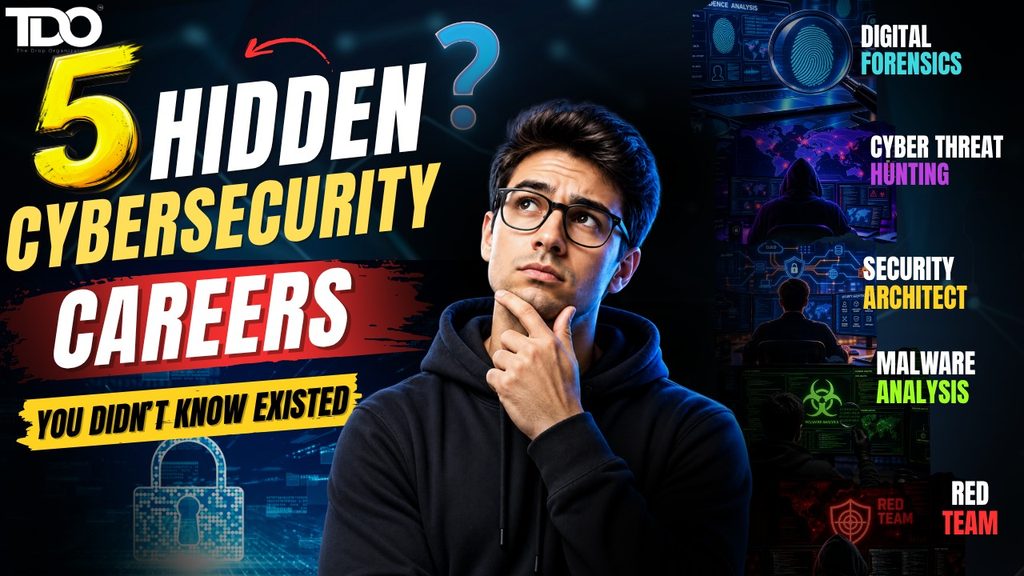
Discover 5 exciting cybersecurity careers beyond ethical hacking, including threat hunting, digital forensics, malware analysis, AI security and risk analysis. When people hear the words cybersecurity careers, they often imagine a hacker, sitting in a dark room, typing commands on multiple screens, trying to break into a computer system. Of course, movies have popularized that image. But the real cybersecurity industry looks very different—and frankly it is a lot more interesting. Cybersecurity is no longer simply about penetration testing, antivirus software, or monitoring suspicious network traffic. As businesses migrate to the cloud, artificial intelligence becomes a part of the day-to-day work, digital investigations are getting more complex, and cyberattacks become more financially damaging, organizations require professionals with highly specialized knowledge. This has created an increasing diversity of cybersecurity careers that many students and beginners have never even heard of. You might be surprised to learn that a person working in security could spend their day investigating digital evidence, hunting for threats that have not yet triggered an alert, analyzing malware, securing artificial intelligence systems or helping organizations understand the financial consequences of a cyberattack. And that is exactly what makes this field so exciting. If you are thinking about a career in ethical hacking, information security or technology, do not restrict yourself to the job titles you already know. There’s a much bigger world than the classic “ethical hacker” or “security analyst” role. In this guide, we’ll be looking at 5 cybersecurity careers that need much more attention. We’ll look at what these professionals do, the skills they need, who can get into these fields and how you can start preparing for them. Also Read:- The Human Firewall: Why Strong Cybersecurity Starts with You in 2026? Why Are There So Many Cybersecurity Careers Today? Before diving into these lesser-known roles, it helps to understand why the cybersecurity job market is so varied. Think about how organizations work today. The company might have websites, mobile apps, cloud infrastructure, remote employees, AI tools, customer databases, payment systems, IoT devices, and hundreds or thousands of employee accounts. Each of these technologies has a potential security responsibility. You can’t have one security team doing everything the same way anymore. Organizations need specialists with knowledge of specific technologies, attack methods, regulations, investigations, and business risks. That’s why the modern cybersecurity careers go far beyond traditional security operations. Some experts halt attacks. Others study them. Some look for hidden attackers inside networks. Others reverse-engineer malicious software, or help companies understand what went wrong after an incident. There are also jobs that blend cybersecurity with law, psychology, artificial intelligence, finance, and business management. It means that building a cybersecurity career doesn’t necessarily mean you have to be a person who likes to sit in front of a terminal all day. Your existing interests can actually help you find your niche. Modern cybersecurity careers go far beyond traditional security operations. 1. Cyber Threat Hunter: The Job That Tracks Down Hackers Before They Are Found Suppose a burglar has entered a building but the alarm system has not yet been activated. A traditional security system might wait for an alarm. A threat hunter does something different. They move through the building, looking for anyone who looks out of place. That’s what a cyber threat hunter really does. Threat hunting is one of the most interesting aspects of modern cybersecurity as it involves pro-actively searching for attackers, suspicious behavior and indicators of compromise within an organization’s environment. Instead of waiting for a security alert to pop up, threat hunters ask questions such as: “Could an attacker already be inside the network?” “Is there unusual activity that our automated detection systems have missed?” “Does this behavior match a known attack technique?” This makes threat hunting one of the more investigative careers in cyber security out there today. What is a Threat Hunter? As a threat hunter, you usually have to deal with huge volumes of security data. This may include endpoint activity, authentication logs, network traffic, cloud activity, DNS requests, process information and security alerts. They look for signals that bad things are happening. For example, let’s say an employee normally logs in from Kolkata during business hours. Suddenly the account starts authenticating from another country at 3:00 AM, accesses unusual resources, and starts downloading massive amounts of data. Then a threat hunter would investigate if this is compromised credentials, legitimate travel, automated activity, or something more serious. Curiosity is needed for the work, because often there is no simple “correct answer” at the beginning of an investigation. Skills that can help you get started in threat hunting: Threat hunting can be particularly rewarding for students who like to solve puzzles, explore unusual behavior, and understand how attackers operate. 2. Digital Forensics Investigator: Solving Crimes With Digital Evidence Have you ever watched a crime investigation show where investigators use fingerprints, CCTV footage, and physical evidence to piece together what happened? Now imagine doing something similar, but with computers, smartphones, servers, cloud accounts and digital storage. Welcome to digital forensics. A digital forensics investigator looks at electronic evidence to determine what happened in a security incident or investigation. They could look at hacked computers, stolen data, suspicious files, deleted information, unauthorized access, or other types of digital activity. This is one of the most unique cybersecurity careers for professionals as it is a mix of technology and investigation and evidence analysis. What Does Digital Forensics Involve? Consider an organization that learns confidential documents were copied from an employee’s computer. The investigator cannot just assume that the employee stole them. Instead, they have to look at the evidence that is available. What dates were the files accessed? What account was used? Was a USB device attached? Were files compressed or copied? Were there any suspicious programs running? Did the data transfer over the network? Were files deleted afterward? Digital forensic investigators use specialized techniques to answer such questions. They may examine disk images, file systems, metadata, system logs, browser history, memory captures, email records
The Human Firewall: Why Strong Cybersecurity Starts with You in 2026?
Discover why the human firewall is the strongest defense against cyber threats. Learn how cybersecurity awareness, smart online habits, and digital responsibility can protect you and your organization from modern cyber attacks. Imagine entering a building secured by biometric scanners, CCTV cameras, security guards and high tech alarm systems. “Every entry is watched, every visitor is checked, every step is noted. It’s almost impossible for an intruder to gain access, on the face of it. Now picture a stranger approaches an employee outside the building and says, “I forgot my access card. Please hold the door for me, okay?” The employee smiles and opens the door, wanting to be helpful. All of these costly security precautions come to nothing in a matter of seconds – not because the technology failed but because a person made an innocent decision. This is one of the simplest examples of why the concept of a human firewall has become one of the most significant discussions in contemporary cybersecurity. When most people think of cybersecurity they think of antivirus software, firewalls, encryption or advanced hacking tools. These technologies are important, but they often miss one important fact: The user of the security system is typically the strongest or weakest link in any security system. Every day hackers do millions of attacks across the world. Surprisingly, many of them don’t start off by attacking computers. Instead they go after people. They send believable emails, bogus job offers, fraudulent payment requests and real looking login pages. Not because software is feeble but because human behaviour is often easier to manipulate. That’s why organizations across the globe are investing not only in technology, but also in building a human firewall. It’s not software – a human firewall. A person with the awareness, knowledge and confidence to identify online dangers before they become security incidents. Cybersecurity doesn’t begin at the computer in today’s digital world. It starts with you. Also Read:- 4 Cybercrime Psychology Secrets: Why People Get Hacked? What Is a Human Firewall? The human firewall is a term used to describe people who are actively protecting themselves and their organization by making smart decisions around cybersecurity. A human firewall acts like a traditional firewall filtering bad network traffic, but filters bad email, bad links, unexpected calls and strange online activities before they do damage. Let’s put it this way. Technology can stop many known attacks. But technology can’t always tell you whether to trust a message claiming to be from your bank. It cannot tell if an email asking for an urgent payment is genuine. Sometimes it does not know when someone is trying to play on your emotions. Enter the human firewall. One important question can help a smart employee, student or web user to prevent an attack: “This looks legit?” That one moment of awareness can sometimes thwart financial fraud, identity theft, ransomware infections, or data breaches. Why Cybersecurity Isn’t Just About Technology Anymore? For many years, cybersecurity was almost entirely focused on technical defenses. Companies bought antivirus software. Firewalls installed. Configured intrusion detection systems. Encrypted sensitive information. These measures are still important, but cybercriminals have evolved. Instead of attacking the technology directly, they began attacking the people using it. Think about investing millions to protect your company’s servers, only to have an employee unknowingly distribute login credentials with a phony email. The technology worked perfectly. The attack worked because of how people behave. That is precisely why the concept of the human firewall has grown more and more significant. Today’s cybersecurity professionals know that it’s not enough to protect computers. People must also understand how cyber attacks work. They need to know. They need to think critically. But most importantly, they need confidence to question suspicious situations. Why Humans Are the First Line of Defense? Cybersecurity is often mistakenly viewed as an IT department responsibility. In fact, anyone who uses a smartphone, laptop, email account or social media is part of an organization’s cybersecurity strategy. Every employee, every student, every teacher, every business owner, every internet user, every choice they make builds up a feeling of safety or exposure. A good human firewall can spot the warning signs before clicking on a suspicious attachment. They check for unexpected requests. They make good passwords. They support Multi Factor Authentication. They report unusual activity rather than ignoring it. In most cases, these simple actions will stop attacks before cybersecurity software is ever involved. This is why more and more experts are talking about people as the first, and often most important, line of defense. The Costliest Cybersecurity Mistake Isn’t Technical Suppose you posed the question: “What is the greatest cyber security threat today?” Most people would say: Malware, Ransomware, Hackers, Viruses, Artificial Intelligence. These are all serious threats, but cybersecurity reports keep pointing to another issue: A human error. Clicking the wrong link, sharing confidential information, using weak passwords, not paying attention to software updates, accessing open WiFi., downloading apps from unknown sources. Each one of these seemingly small choices can open the door for attackers. This is not to say people are careless. It just means people are busy. We’re distracted. We’re curious. We’re emotional. Most people don’t realize how well cybercriminals understand these behaviors. That’s why building a human firewall is no longer optional. It’s becoming a necessity. Hackers Don’t Hack Computers First- They Hack People One of the greatest myths regarding cybersecurity is that hackers spend all their time writing complex code. In reality, many successful cyber-attacks start with a simple chat. A fake email. A scam phone call. A convincing LinkedIn message. A QR code placed in a public location. A social media advertisement. Each attack is carefully crafted around human psychology. Attackers know people trust known brands. They know students react quickly to internship opportunities. They know that employees fear the loss of access to company accounts. They know that panic breeds urgency, Cybercriminals often try to convince people to bypass security software, not try to beat it. And that’s
4 Cybercrime Psychology Secrets: Why People Get Hacked?
Discover the truth behind cybercrime psychology and learn why people become victims of cyber attacks. Explore the human side of hacking, common psychological tricks used by cybercriminals, and practical ways to stay protected. Think of a phone call from your bank telling you that your account has been compromised. The voice on the phone is calm, professional and oddly convincing. You share an OTP to “secure” your account without thinking twice. A few minutes later your savings are washed away. Now ask yourself one simple question. Was your phone hacked because it was too weak? Or were you hacked because somebody knew your mind better than your device? This is the point where the cybercrime psychology concept becomes very important. When you hear the word hacker, you generally picture people sitting in dark rooms, surrounded by computer screens, typing complex code to break into secure systems. In the movies they’re portrayed as technical geniuses who can outsmart sophisticated security software. Most successful cyber attacks don’t even start with computers. They start with understanding people. Computers don’t usually make emotional decisions and cyber criminals know that. Humans do. That’s why modern cybercrime is as much psychology as technology. Attackers often attack firewalls after attacking fear, curiosity, trust, excitement, greed and urgency. They play on human emotions until the victims, unknowingly, allow them access. This secret science is called cybercrime psychology and knowing it can drastically cut down your chances of being the next victim. In this blog, we will discuss why having a high IQ doesn’t prevent people from falling for online scams, how cybercriminals exploit human behavior, and why cybersecurity is no longer just about protecting computers, but protecting the human mind. Also Read:- 7 Digital Marketing Myths You Should Stop Believing in 2026 What is Cybercrime Psychology? Before we start with the question of how hackers manipulate people, let’s learn what the science of cybercrime psychology actually is. In simple terms, cybercrime psychology is the study of how cybercriminals exploit human thoughts, emotions, habits, and decision making to successfully carry out cyber attacks. Hackers know one important truth. It is difficult to get into a secure computer. Convincing a person to open the door is often much easier. Attackers will spend minutes to craft convincing emails, fake websites or persuasive phone calls rather than spending weeks searching for software vulnerabilities. But in reality, they aren’t really after your computer. It’s your decision making. Grasping the cybercrime psychology assists in understanding why people click on dubious links, download infected files, believe fake messages or give away confidential information without knowing the consequences. That’s why cybersecurity experts often say, “Humans are the weakest link in cybersecurity.” Not because people are not smart. But because people naturally trust, respond emotionally and make snap decisions under pressure. Why Cyber Criminals Attack People, Not Computers? Technology is very advanced. The companies spend millions on firewalls, encryption, anti-virus software and intrusion detection systems. Banks have whole teams of cybersecurity experts. Big organizations do security audits on a regular basis. It’s not impossible to break through these defenses, but it takes work. Humans, however, are unpredictable. People are tired. People get sidetracked. People get curious. People panic. People trust authority. Cybercriminals have a remarkable insight into these behaviors. This understanding underpins cybercrime psychology. Attackers often ask themselves a much simpler question instead of attacking complicated software: “How can I convince someone to give me access willingly?” This method saves time and increases the success rates. For example you might get an email that says something like this: ” Your email account will be deleted forever in 1 hour if you do not verify your password right now. ” Many people won’t bother to check the sender. Fear takes over instead. They clicked on the link. Enter their password. And unwittingly surrender their credentials. The computer had not been cracked. The person had been set up. The Human Brain: The Biggest Security Weak Link One of the most interesting things about cybercrime psychology is how our brains respond to emotion. Humans don’t make decisions based on pure logic. But emotions play a part in almost every important decision we make. These emotional shortcuts are carefully exploited by cybercriminals. They create situations where victims cooperate willingly. They do not force victims to act. Here are some of the most common psychological triggers: The Deadliest Weapon: Fear One of the strongest human feelings has been fear. Cybercriminals know this very well. Now imagine getting this message: “Your bank account has been frozen.” Or, “The Income Tax Department has detected suspicious activity.” Or, “Your social media account will be permanently disabled today.” Most people stop thinking rationally immediately. Instead they will solve the problem. The urgency causes mistakes. Victims click on malicious links. Download of fake applications. Show passwords. Share OTPs. The attack is successful because fear overrides logic. This emotional manipulation is one of the most obvious examples of cybercrime psychology at work. Curiosity Makes People Click Did you ever get messages saying: “Who checked your profile?” “Private video leaked.” “Congrats! “You got a new phone. See what someone said about you.” The purpose of these messages is one. To spark curiosity. Curious, it is natural. Humans are always searching for new information. Cybercriminals know this all too well. When curiosity starts, many people ignore warning signs. They click on links they don’t know. Download files that seem suspicious. Install bogus apps. Sometimes mere curiosity is sufficient to bring down a whole system. That’s why cyber security experts keep telling people to verify information before clicking on anything online. We can understand cybercrime psychology to know that it is not always technical hacking that hackers do. Sometimes they count only on human curiosity. Trust: The Door Hackers Walk Through Invisibly Trust is what makes society work. We believe in our banks. We depend on our employers. We depend on delivery companies. We trust friends. Unfortunately, cyber criminals take advantage of this behavior. Imagine getting an email that looks
7 Inspiring Years of The Drop Organization: The Untold Story of a Growing Cybersecurity Training Platform

Discover the untold story of The Drop Organization (TDO), a growing cybersecurity training platform built through teamwork, innovation, student support, and a vision to transform education in India. Some start in big offices with big money, big teams and big business plans . Others start with something much smaller – a simple idea, a vision, and a group of people willing to work tirelessly to make that vision a reality. The story of The Drop Organization, or TDO as it is popularly called, is in the second category. Today, The Drop Organization is a well-known cybersecurity training platform, a training brand and a vibrant community of learners interested in ethical hacking, cybersecurity and digital marketing. Students can see courses, live classes, certifications and internships and practical learning. Many people don’t see the journey behind all of this. They don’t see the late nights of working out ideas. They do not see the thousands of experiments that failed before the success. They don’t see the little victories that eventually became milestones. They don’t see the people behind the screens who built everything piece by piece.” This is more than the story of a company. This is the story of people who chose to create something meaningful together. Here is the untold story of The Drop Organization. Also Read:- Password Security in 2026: Why Strong Passwords Are Not Enough Anymore Brick by Brick: Creating a Company From the outside, growth often seems fast. People see a company with students, instructors, offices, projects and teams and assume that success comes instantly. But the reality is often very different. The Drop Organization was not built overnight. Like all journeys of importance, it was made brick by brick. Everything we did, every process, every course, every system, every improvement, every achievement was the result of constant effort and teamwork. The organization chose to build solid foundations, not to find shortcuts. It is seldom that a strong company is built by one man. It is created by people who share a vision. At The Drop Organization, that vision has never been just about running courses or training students. From the beginning, it has been about much more than that – it’s about creating opportunities, transforming education and building practical skills that really change lives. That vision underlies every decision to this day. More Than Colleagues, A Family That Builds Together The first thing people notice when they walk into TDO is the difference in the environment. There is work to be done. There are targets. There are time limits. There are duties. But there’s something more as well. Respect. Assistance. Faith. Unity. Many organizations have departments that do not communicate very often with each other. Collaboration has always been one of the organization’s biggest strengths at The Drop Organization. Ideas move freely. We solve problems in collaboration. Celebrating success together. Failures are reviewed as a whole. The relationship between team members often goes beyond the professional. Team members support each other as colleagues, but also as people who actually want to see each other grow. This culture didn’t happen by accident. It was designed. Because when people feel respected, valued and heard, they naturally give more than their time. They put their creativity into this, their passion and their energy. And that is how The Drop Organization grew. The Philosophy Behind Training Employees Many organizations have people to perform some jobs. The Drop Organization approaches it differently. The organization believes in developing people and not just managing roles. New hires are not viewed as a resource to fill roles. They are the future leaders, creators, innovators and contributors to the journey of the organization. The Drop Organization’s training is often much more than just technical skills. Employees learn: Communication skills – Problem-solving approaches – Team collaboration- Professional ethics – Leadership qualities – Creative thinking – Client interaction. It’s meant to help a person succeed in their current role but also to prepare them for future possibilities and responsibilities. Such an attitude fosters confidence. It fosters ownership. Most importantly it creates people who care about the success of the organization because they know the organization cares about their success as well. Learning Never Stops Inside TDO One interesting thing about the internal culture at The Drop Organization is that learning doesn’t end at onboarding. The tech world is moving fast and so cybersecurity is evolving fast too. Digital marketing is a fast-moving world. Education happens rapidly. Because of this, continuous learning has become a part of the organization’s identity. Instructors learn from students. Students learn from instructors. Teams learn from one another. Each department exchanges ideas. It creates an ecosystem where knowledge is flowing in all directions. Maybe that’s one reason why innovation flows so naturally in the organization. How TDO Helps Students Beyond the Classroom? For many institutions, education stops when the class stops. And that’s usually where the real journey starts for The Drop Organization. Students are not figures or numbers in the register. They are seen as future professionals as future business people, as future ethical hackers, the upcoming marketers & the innovators of the future. It has been about practical development, not theoretical perfection. This is one of the reasons why programs like DCSC and THT put such a high value on practical exposure, real-world understanding, hands-on learning and mentorship. Students are encouraged to ask questions. They are invited to experiment. They are taught to fail safely and to learn from their failures. Because the cybersecurity industry does not reward rote memorization. It rewards understanding. This philosophy continues to inform the design and delivery of training. Developing Careers, Not Just Certificates One of the biggest challenges in education today is the widening gap between learning and employability. Many students complete certificates but find it difficult to implement what they’ve learned in real-world settings. This challenge was recognized early by The Drop Organization. The Drop Organization has increasingly transitioned from just delivering content to building career readiness. This meant creating learning experiences that