
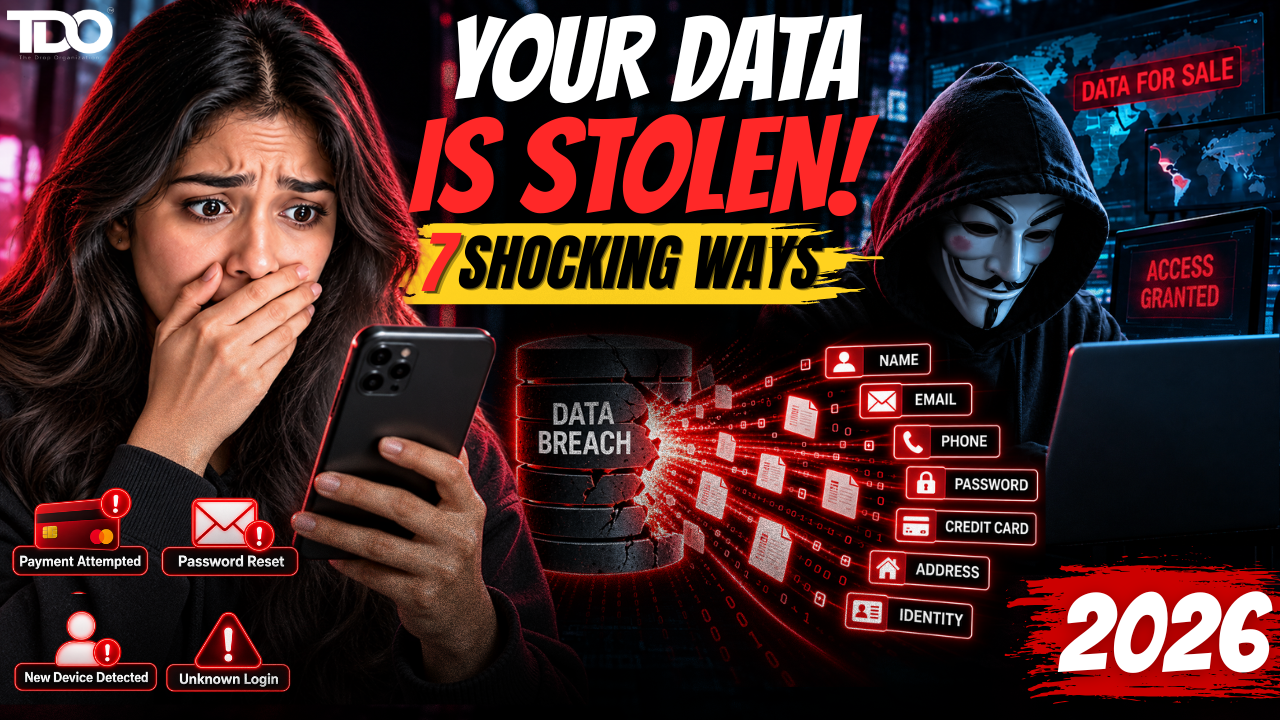
Discover what happens after a data breach, how leaked personal information can be misused, and the practical steps you can take to protect your identity, accounts, money, and digital privacy in 2026.
Imagine waking up one morning and receiving an email that says: “We recently discovered a security incident that may have exposed some of your personal information.”
At first you might be thinking, “Okay, but what does that even mean?” Maybe your name leaked out. Maybe it contained your email address, phone number, username or password. A more severe incident could involve financial information, identification documents, addresses, or other sensitive records.
The company may tell you that it has secured the system. You change your password. You delete the email. And you move on.
But here comes the uncomfortable part: a data breach does not necessarily end when the company fixes the vulnerability. Once an unauthorized person has copied information, the damage may continue long after the original incident has been controlled. Someone may try your stolen credentials on another site. Phishing messages can be convincing and your email address may be the target. Personal details could be combined with information from other sources to build a more complete profile of you.
This is why it is important to understand a data breach, even if you are not a cybersecurity professional. Your personal information is valuable. And in today’s connected world, protecting it is becoming as important as protecting your physical possessions.
Also Read:- 5 Powerful Cybersecurity Careers You Didn’t Know Existed in 2026
What is a Data Breach?
Before we explore what happens after information is exposed, let’s make one important distinction. A data breach is an incident where sensitive, confidential or otherwise protected information is accessed, disclosed, stolen or exposed without authorization. The information involved can vary dramatically. It might include:
- Names and email addresses
- Phone numbers
- Usernames and passwords
- Home or billing addresses
- Date of birth
- Financial information
- Health information
- Government identification details
- Customer records
- Business information
- Authentication tokens or credentials
Not every incident exposes the same kind or amount of information. A marketing database with names and email addresses poses a different risk than a database with passwords, payment information or identity documents. That distinction matters because the impact of a data breach depends a lot on what was exposed, how it was guarded and what attackers can do with it.
Why Are Data Breaches Such A Big Deal?
We live in an age where large amounts of personal information is stored digitally. Think about all the information you’ve ever put on the internet.
Your Shopping Passes → Your social media profiles → Your college applications → Your banking information → Your food-delivery accounts → Your email addresses → Your phone number → Your travel bookings → Your employment records → Your subscriptions and many more.
Every individual account may seem insignificant. Together, they can create one super detailed digital identity. That is why a data breach can have repercussions beyond the organization that had the incident first.
Verizon’s 2025 Data Breach Investigations Report looked at more than 22,000 security incidents, including 12,195 confirmed breaches across 139 countries. It found compromised credentials was an initial access vector in 22% of breaches, with exploitation of vulnerabilities 20%. The report also found that about 60% of the breaches analyzed, still involved human activity.
These figures tell us something important: Cybersecurity is not simply a problem for large corporations. It can have a knock-on effect on the people whose information those organizations store.
1. Your Password Can Be an Entry Point For the Attacker
After a data breach, the compromised credentials are probably the most immediate threat. Let’s say you signed up for a website five years ago. You created a password. Then you reused that same password somewhere else because you had a number of other accounts to manage.
Now imagine the original website suffers a breach and your username and password are exposed. The attacker does not even need to manually select the second website.
Automated systems may test stolen credentials against other services. This method is often associated with credential stuffing. And it is one reason password reuse can turn one compromised account into several compromised accounts.
Verizon’s 2025 research found that the median user in its infostealer analysis had unique passwords for just 49% of its services, indicating that password reuse was still common. That’s why a data breach with passwords should never be taken lightly.
If you learn that your password has been compromised change it immediately anywhere else you have used it.
Better yet, use: Unique passwords for important accounts → A reputable password manager → Multi-factor authentication → Passkeys where supported
Your password should not be the master key to all your digital doors.
2. Your Email Address Is a Target for Phishing Attacks
Sometimes people hear that only an e-mail address was exposed and they think: “That’s not a big deal. My email address is already public.”
It still can matter. A leaked email address can be more useful to an attacker when combined with other data.
Imagine a data breach that reveals your: Name + email address + phone number + account history. The attacker now has context. They can create more believable messages. Rather than sending: “Dear customer, click here.” Or they can build something that looks like it’s from a company you actually use. That’s where phishing becomes really dangerous.
A convincing message could claim:
- Your account has been locked.
- Your payment failed.
- Your delivery is delayed.
- Your subscription is expiring.
- Your bank needs verification.
- Your password must be reset.
The attacker isn’t quite trying to hack the system directly. They want to persuade you to open the door.
3. Your Personal Information May Be Combined With Other Information
This is one of the least understood effects of a data breach. Data does not always exist in isolation. Imagine one incident leaked your name and email address. Another database already contains your phone number. Your social media profile for the public shows your place of work. A different service contains your date of birth. Individually, these pieces may appear harmless. Together they can create a much clearer picture. This process is sometimes called data aggregation.
The value to attackers may be in combining them. That’s why online privacy matters, even if individual bits of information don’t seem all that sensitive. You don’t want to share every detail about yourself publicly because information that seems harmless today can be combined with information exposed tomorrow and become useful.
4. Identity Theft May Be a Real Threat
One of the most severe consequences of a data breach is identity theft. Identity theft is when someone steals another person’s personal information and uses it to commit fraud. Depending on the information involved, criminals may try to:
- Open fraudulent accounts
- Impersonate victims
- Conduct financial fraud
- Create fake profiles
- Apply for services
- Make unauthorized transactions
- Manipulate customer-support processes
A stolen record doesn’t always mean an identity theft victim. That’s important to understand. Having your email address leaked is not the same thing as having your entire identity stolen. The risk depends on what kind of information is exposed and how attackers can use it. But it’s something that needs to be addressed immediately when dealing with sensitive identity information.
5. You Could Become the Target of More Sophisticated Scams
And that’s where it gets interesting. Cybercriminals don’t always require sophisticated malware. Sometimes, they need information. Imagine an attacker knows your name, your employer, your email, your phone number, & service you use. They can craft a very personal scam. This is why a data breach can increase the effectiveness of social engineering.
The attacker does not guess everything. They’ve already received some of the information. A message with accurate personal details seems so much more trustworthy than a generic scam message. That can have a dangerous psychological effect: Familiar information breeds false confidence.
So, after a breach, don’t just assume a message is legit because it has your real name or otherwise accurate information. Verify it independently.
6. Your Information Could Appear on Criminal Marketplaces
A serious data breach also raises the concern that stolen information might be traded or disseminated within the criminal ecosystem. You may have heard of the term “dark web” during cybersecurity conversations. The dark web itself is not synonymous with crime, but some of the hidden services and marketplaces have historically been used for illegal trade including stolen credentials and personal information.
Data can also be sold via private channels, criminal forums, messaging groups or other underground communities. This creates a difficult problem for the victims. Once information is copied, you cannot just delete every copy of it. That is why data protection is fundamentally different from protecting a physical object. If someone steals your laptop you can buy another laptop. If sensitive data is copied, the data itself cannot necessarily be made secret again.
7. A Breach Can Affect You Months or Even Years Later
This is perhaps the most important point. Data breaches don’t always have an immediate impact. Today you might not see anything unusual. Or the next day. Or the month later. Then, a few months later, you get a suspicious message referencing information you don’t remember sharing recently. This is why people shouldn’t presume: “Nothing happened, so I’m safe.”
Sometimes it’s slow damage. Stolen information can be stored and combined with other information and used at a later time. That doesn’t mean you need to live in fear. That’s what it’s about. You have to respond intelligently.
Good cybersecurity shouldn’t be a constant worry. It’s about limiting the attackers’ opportunities.
What Are The Effects of a Data Breach to a Business?
So far we have looked at this from the victim’s point of view. But what about the organization? A major data breach can have technical, financial, legal and reputational consequences. The organization may need to investigate the incident, identify what was accessed, contain the attack, reset credentials, notify affected individuals, work with regulators, investigate the attacker’s methods, restore systems, improve security controls, along with dealing with customer concerns. And the financial repercussions can be hefty.
IBM’s 2025 Cost of a Data Breach research reported a global average breach cost of $4.44 million, based on research covering 600 breached organizations across 17 industries. In India, IBM reported that the average organizational cost of a breach reached approximately ₹220 million in 2025, representing a 13% increase from the previous year.
These figures are organizational costs, not the amount that a single victim personally loses. But they demonstrate the cost of a serious cybersecurity incident.
What Should You Do If Your Personal Data Has Been Leaked?
Now, let’s turn to the helpful part of the scary part. If you learn that your information was exposed, don’t panic. Take action methodically.
Step 1: Find Out What Was Exposed
Don’t assume the worst. Read the company’s breach notification carefully. Try to find out if the incident involved email addresses, passwords, financial information, phone numbers, identification documents, security questions, authentication tokens, or other sensitive information. The type of exposed information determines your next steps.
Step 2: Modify Affected User Password
If you’ve been affected, change your password immediately. And remember: Changing one password isn’t enough if you reused it elsewhere. Check your important accounts & prioritize email, banking, payment services, social media, cloud storage, work accounts, & shopping accounts. Your email is worthy of special attention, because it can often be used to reset passwords for other services.
Step 3: Turn on Multi-Factor Authentication
Multi-factor authentication provides another layer of security. The account requires verification of another type besides a password. This could involve an authenticator app, a security key, a passkey or another approved authentication method. Even if your password is obtained by an attacker through a data breach, having an additional authentication factor can make it much harder to hijack your account.
Step 4: Monitor Your Financial Accounts
If your financial information may have been exposed, watch your accounts closely. Look for unrecognized transactions, unexpected withdrawals, new account notifications, unusual payment requests, or changes to account information. If you suspect something, contact your bank or financial institution using its official communication channels. Don’t call a phone number that is given to you in a suspicious message.
Step 5: Watch Out for Unexpected Messages
Assume there will be more realistic phishing attempts after a data breach. Be particularly careful when someone asks you to:
- Click an unexpected link or
- Share an OTP or
- Reveal a password or
- Download an attachment or
- Install software or
- Make an urgent payment or
- Confirm sensitive information
Remember, even if a message appears legitimate, it may not be legitimate.
Step 6: Check for Existing Accounts
Check your main online accounts. Look for unknown login sessions, new devices, changed recovery emails, changed phone numbers, unexpected password-reset notifications, or any new applications connected to your account. If you see anything suspicious, lock the account right away.
Step 7: Learn From the Incident
This final step is often forgotten. A data breach can be a lesson regarding cybersecurity. Maybe you re-used passwords. You may have never turned MFA on. You have probably put too much personal information out there. Perhaps you used the same email address across the board. Make the incident an excuse to improve your personal security overall.
How to Minimize Damage Before a Data Breach Occurs?
You can’t control whether every company you use suffers a data breach. But you can control your exposure. Imagine your personal cyber security as locking your house. You can’t stop all the burglars in the world. But you can make it much harder to get into your house. Build better digital habits, use unique passwords, MFA, password managers, software updates, secure Wi-Fi, privacy settings, device encryption where appropriate & regular account reviews.
Also, don’t share sensitive information unnecessarily. Ask yourself: “Does this website really need this information?” If it is not, don’t give it unless there’s a good reason.
The Human Element of Data Security
Cybersecurity discussions can get technical at times. We discuss firewalls, encryption, zero day, malware, authentication, vulnerability management and many more. But behind every record in a database is a human. Your name is more than a column in a spreadsheet. Your phone number is attached to your life. Your email address is linked to your relationships, work, and accounts.
Your financial information is connected to your work. That’s why the security of personal information matters. Cybersecurity is not only about protecting servers. It is about protecting people.
Why is Cybersecurity Awareness Important for the Drop Organization?
This is also where cyber security education becomes important. The Drop Organization (TDO) provides cybersecurity and ethical hacking training that enables learners to understand how attacks work and how systems can be defended. TDO’s cybersecurity services include beginner-level training such as The Hack Track (THT) and advanced ethical-hacking education through the Drop Certified Security Course (DCSC).
The organization’s material is focused on practical learning including Linux, web application penetration testing, and security tools. This practical approach matters because knowing that “hackers steal information” is not sufficient to understand a data breach. You should understand the chain:
Vulnerability → Initial Access → Compromise → Data Exposure → Credential Abuse → Social Engineering → Potential Fraud
You can appreciate cybersecurity a whole lot easier when you see that chain. TDO has also trained more than 20,000 students, as part of its commitment to democratizing learning regarding cybersecurity for a wider learner base. This is an important lesson for students and aspiring cybersecurity professionals: cybersecurity is not simply about learning tools. It’s about understanding how attackers think, how systems fail, and how defenders can reduce risk.
Data Breach vs Personal Data Leak: Are They the Same?
Often you will come across the terms data breach and personal data leak used interchangeably. They are close but they do not always mean the same thing in technical usage. A data breach generally refers to unauthorized access, disclosure or acquisition of protected information. Data leak can be a term to describe information that is exposed or made available unintentionally or through unauthorized disclosure.
For example, a data leak might arise from a misconfigured cloud storage bucket exposing customer information. If a criminal hacked into a company’s database and stole customer records, that would normally be called a data breach. The question for the everyday user is not, however, which label is used. The key question is: What information was exposed, who could access it, and what can they do with it?
The Growing Importance of Personal Data Protection
The more services we use online, the more organizations have to protect, shopping, education, health care, banking, entertainment, government services, & communication. Today almost everything we do generates digital data.So, data security is a shared responsibility.
Organizations require solid safety controls. Employees must know cybersecurity. Users need to have safer digital habits. And cybersecurity professionals must continually update their skills as attackers evolve. This is particularly important as AI opens new possibilities for both defenders and attackers.
IBM’s 2025 research found that 13% of organizations surveyed said they had experienced breaches involving AI models or applications and 97% of those organizations said they didn’t have proper AI controls for access. That means the cybersecurity landscape is moving away from traditional databases and websites. Attack surfaces are evolving.
What Should You Remember About a Data Breach?
If you take away just a few things from this article, remember these:
- Just because there’s been a data breach, it doesn’t mean your identity has been fully stolen. The risk depends on what information got leaked.
- Reusing passwords can make a compromised account much more dangerous.
- Your email address and personal details can help phishers make their messages look more convincing.
- Multi-factor authentication can additionally provide an important layer of protection.
- Monitor important accounts after learning about an incident.
- Just because you have accurate personal information, don’t trust a message.
- Minimize unnecessary personal information shared online.
- Treat cybersecurity as an ongoing habit and not a one-off task.
Above all, don’t wait for something to go wrong to think about your digital security.
Final Thoughts: Your Data Is More Valuable Than You Think
A data breach may sound like a distant corporate problem. A headline pops up. A company issues a statement. People talk about it for a couple days. And then another story takes its place. But lurking behind that headline could be millions of ordinary people whose data has been copied, exposed or compromised.
And this is why the question “What happens when your personal data is leaked?” demands a serious answer. Sometimes nothing really happens. Sometimes you get some suspicious emails. Sometimes an attacker tries to hijack a user account. In more serious cases, exposed information can lead to identity theft, financial fraud, targeted phishing or other forms of cybercrime.
The good news is that you’re not helpless. You may create unique passwords. You can turn on MFA. You can restrict how much personal information you share. You can track your accounts. You can learn to spot phishing. You can keep your apps and devices up to date. And you can build the cybersecurity awareness you need to spot risks before they become problems.
The digital world isn’t going to become less connected. If anything, it will become more connected. This means your personal information will keep flowing between websites, apps, organizations and devices. The aim here is not to disappear off the web. The goal is to be a smarter, more security-conscious user of it. Protecting your personal data is part of protecting you when it goes digital.
What is a data breach?
A data breach occurs when sensitive or protected information is accessed, exposed, disclosed or stolen without authorization. The exposed information could include passwords, email addresses, financial details, personal records or other sensitive data.
What happens if my personal data is leaked?
The consequences depend on what information was exposed. A personal data leak could result in targeted phishing, credential stuffing, identity theft attempts, financial fraud or unwanted spam. However, a leak does not automatically mean that someone has stolen your identity.
What should I do after a data breach?
First, determine what information was exposed. Change affected passwords, especially anywhere the same password was reused, enable multi-factor authentication and monitor important accounts for suspicious activity. Be particularly careful with unexpected emails, calls and messages.
Can a data breach lead to identity theft?
Yes, particularly when sensitive identity information is exposed. Criminals may combine leaked information with data obtained elsewhere to impersonate victims or attempt fraudulent activity. The risk varies significantly depending on the type of information involved.
Is a leaked email address dangerous?
An email address alone may not be enough for serious account compromise, but it can become valuable when combined with other information. Attackers may use it for phishing, spam, credential attacks or social engineering, particularly when they know additional details about you.
Your Digital Safety Journey Doesn’t End Here!
Want to start your learning journey on Cyber Security and Ethical Hacking field?

One Response